
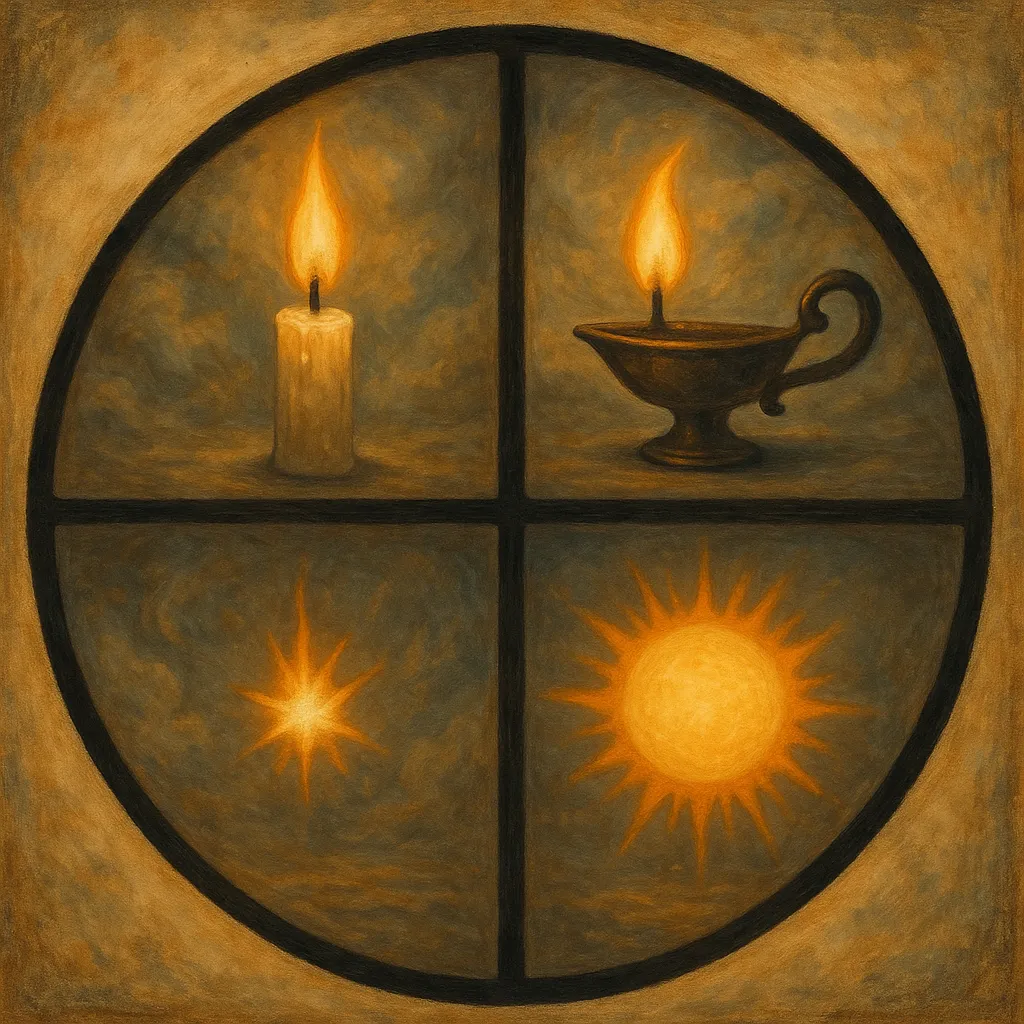
In that circular tableau where four luminosities—the modest taper whose flame trembles with the same hesitant grace as the consciousness of a child taking its first uncertain steps toward self-awareness, the oil lamp’s more refined radiance (suggesting perhaps the soul’s passage through civilizations of increasing sophistication, from the crude rushlight of primitive epochs to the elegant vessels of a more cultivated age), then that sharp stellar burst resembling nothing so much as the sudden, piercing moment when one apprehends, in the midst of life’s mundane progression, a truth previously obscured by habit’s comfortable veil, and finally the sun itself in all its pneumatic fullness, that orb which seems to contain within its swollen circumference all the accumulated experience of previous existences now ripened into a wisdom warm and all-encompassing—illuminate their separate chambers yet remain forever divided by those implacable black bars which suggest that even as the soul ascends through its successive incarnations, each life remains enclosed within its own inviolable moment, touching yet never quite merging with those that came before or shall come after, much as the various epochs of one’s own existence, though linked by the continuous thread of memory, retain each its distinct and unrepeatable savor.
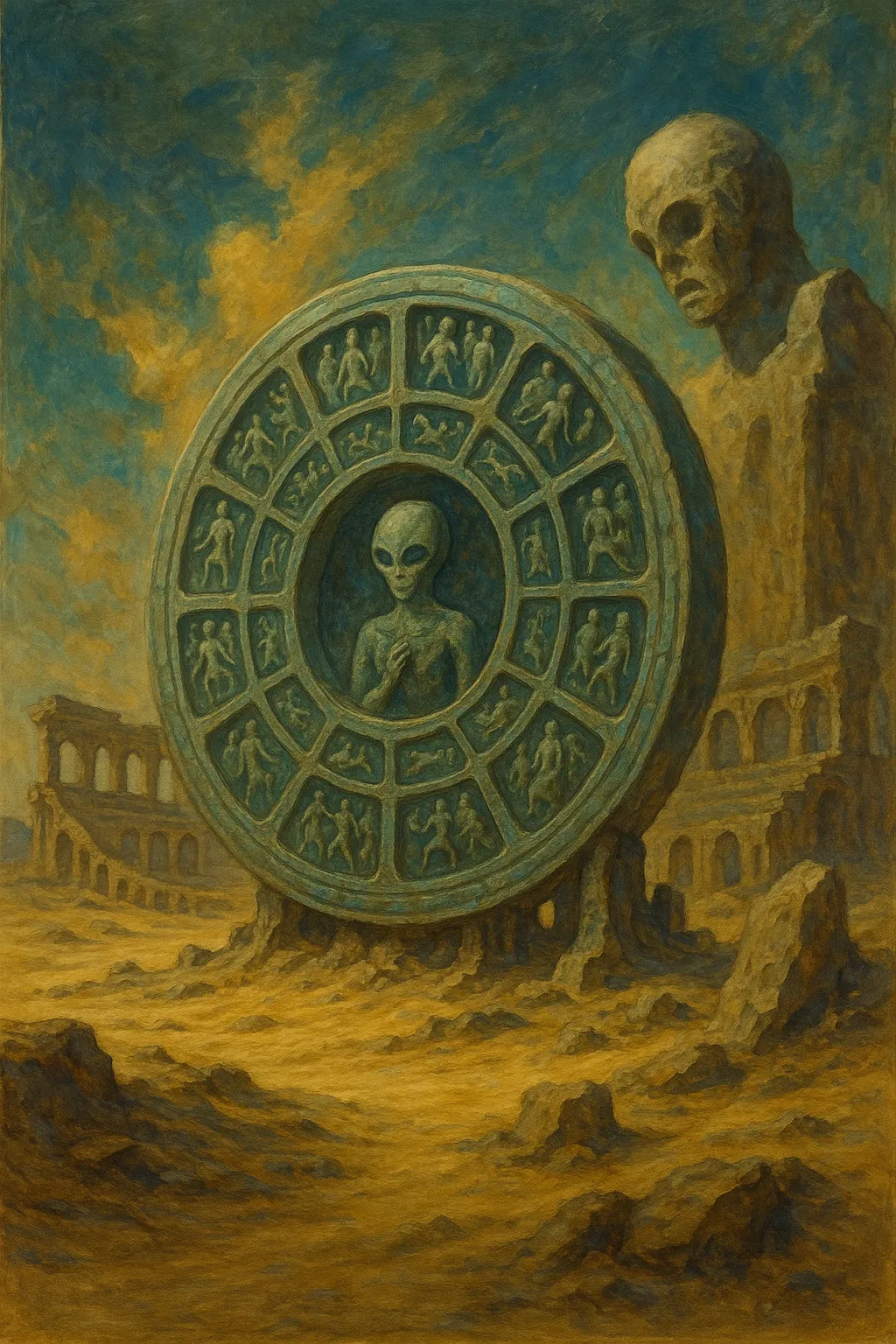
In the ochre waste where the ruins stood skeletal against a sky the color of old brass the wheel leaned there canted in the sand, its compartments cut like cells in some vast and intricate honeycomb, and in each cell the figures stood or knelt or embraced in attitudes of supplication or coupling or murder—who could say which—their forms worn smooth as creek stones, anonymous, the wheel itself a mandala of flesh repeated, and at its center the alien regard, that hairless and implacable witness with its eyes like pits bored into nothing, and behind it the larger figure risen up out of the sand itself perhaps or simply waiting there since the world’s morning, its skull face turned toward some horizon that had long since ceased to exist, the whole tableau composed in that desolate light as if arranged by hands that understood geometry but not mercy, the aqueducts in the distance marching toward their own extinction, and over it all the sky churning with ancient poisons, and you got the sense looking at it that the wheel had turned and would turn again, grinding through its permutations of torment or ecstasy—no difference finally—each figure locked in its chamber like a sin in the heart, inexpiable, the math of it precise as death, the alien at the hub serene in its witnessing, and all of it half-buried in that sterile dust which was maybe the dust of empires or of worlds or just dust and nothing more, the wind beginning to cover it over grain by grain in the measureless noon.
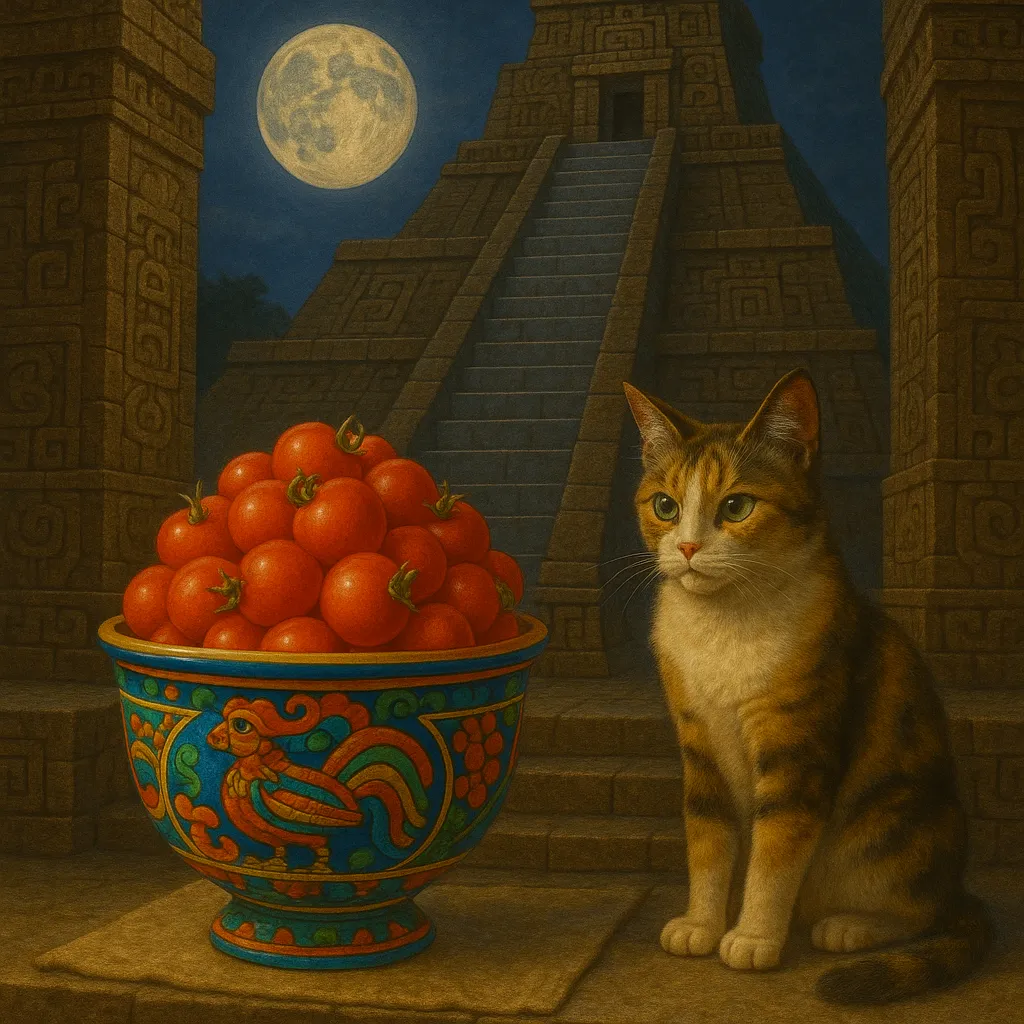
In the days when the pyramids still remembered the names of their builders and the moon hung low enough to taste the smoke of copal fires, there lived in the city of forgotten gods a calico cat who had been appointed by no one in particular to guard a bowl of tomatoes so red they seemed to contain all the sunsets that had ever bled across the valley, and the bowl itself was painted with serpents whose scales were the colors of paradise before the fall, and the cat whose eyes held the green of jungles that no longer existed would sit there every night without fail, not because anyone had asked her to or because she expected payment in fish or cream, but because her great-great-grandmother had whispered to her great-grandmother in the language that cats spoke before they forgot how to speak that the tomatoes were not tomatoes at all but the crystallized tears of the last priest who had climbed those steps behind her, one hundred and seven years ago, carrying his own heart in his hands as an offering, and that whoever ate them would remember everything—every love, every betrayal, every small mercy and large cruelty since the world began—and would go mad from the weight of it, and so the calico sat there in the moonlight which was itself a kind of memory, patient as stone, her whiskers trembling slightly in the night wind that carried rumors of rain that would not fall for another three hundred years, and the tourists who sometimes stumbled into that courtyard would photograph her and say how charming, how picturesque, never knowing they were looking at the last guardian of a sorrow too beautiful to be consumed.
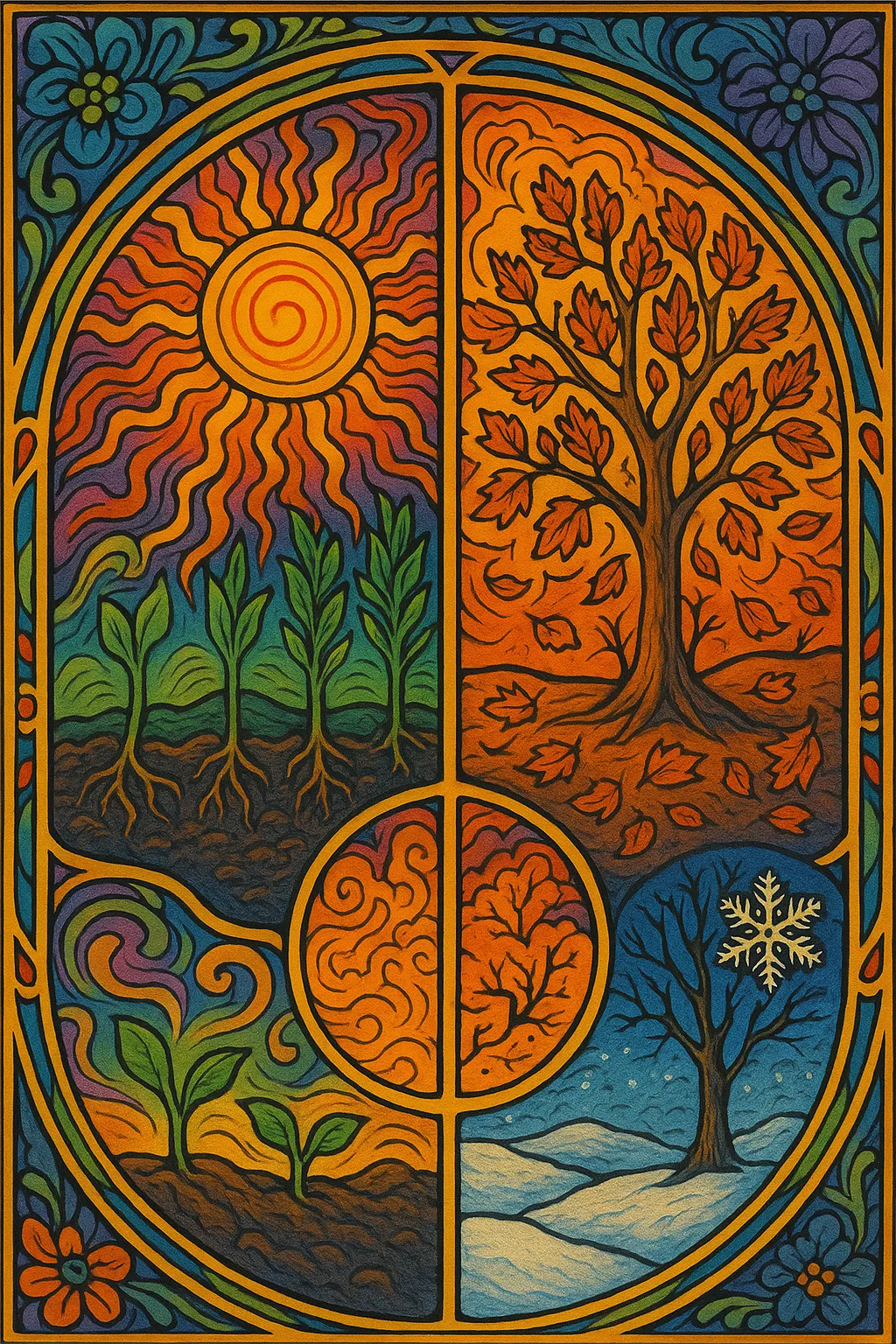
The composition, with its quadrants of sun, sprout, leaf and snowflake, presents itself less as a picture to be grasped outright than as a delicate arrangement of suggestions—each season leaning into the next with a sort of half-withheld confidence, so that one’s apprehension of the whole is not a matter of stark recognition but of slowly succumbing to the impression of something at once inevitable and elusive, intimate and remote. The solemn sun lingers above roots that, in their patient secrecy, foretell the tree’s splendor and decline, while autumn’s golden flames already whisper to winter’s pale breath, all encircled by a border of ornamental arabesques that seem less decoration than the very pulse of time itself.
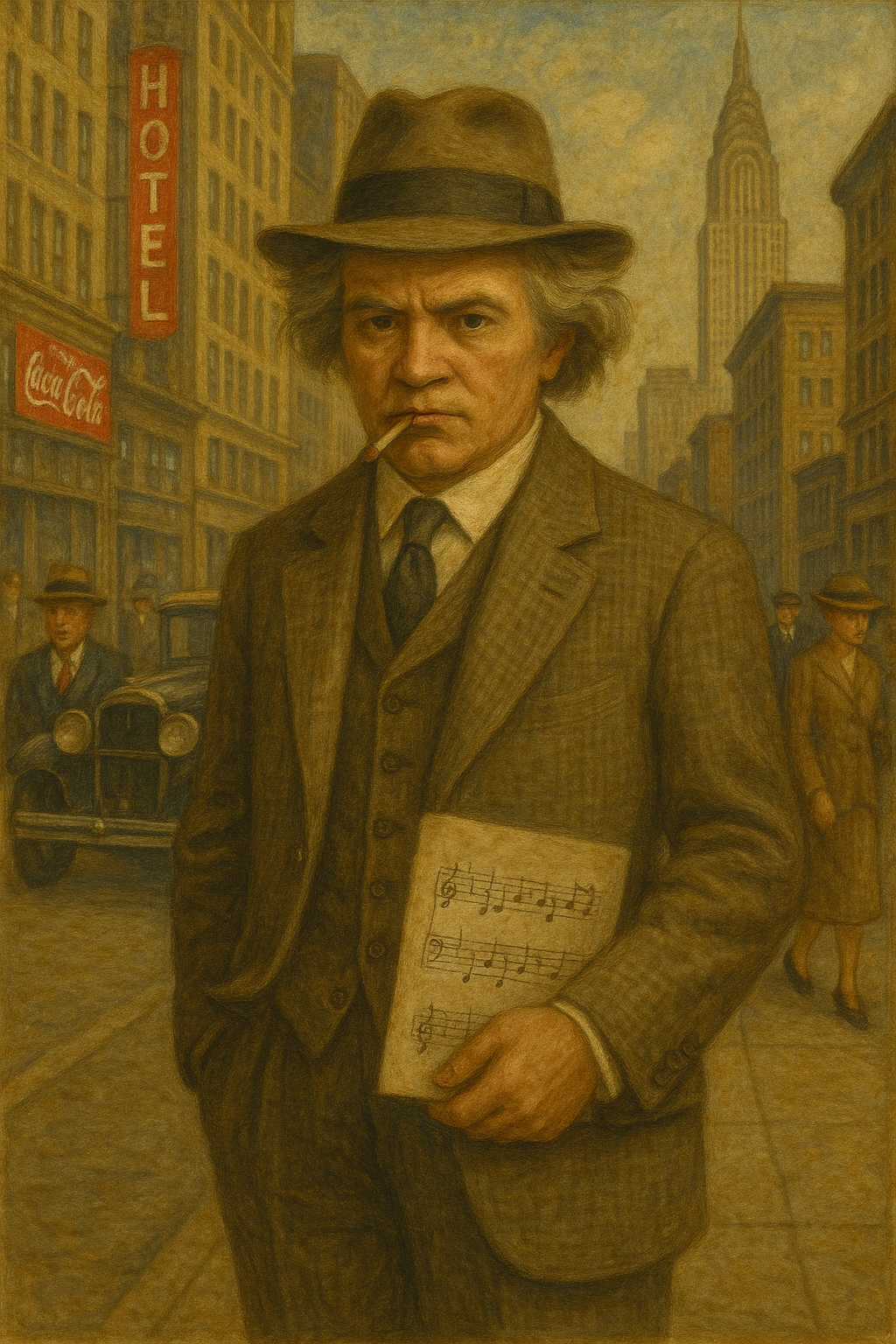
 Petronius Jablonski
Now I wonder if I’m using too many periods!
Are they those small round thingies? I try to avoid them