Existentialism, Nihilophobia, Ontology, sweetness of honey, Truth

The Sweetness of Honey

A Novel of Vengeance, Honor, and Bobbleheads

1306757

One: Requiem for Gorillas

“He will be remembered for his sense of humor, his smile, how he loved to fish,” says the priest, as if citing an obscure beatitude. Blessed are they who cast their line from crowded piers. Memory of their deeds shall endure. Bonus points for smiling.

A hulking police officer walks across the altar and whispers in his ear. They confer, a pantomime of confusion and urgency. The officer takes the microphone like a reluctant karaoke singer. “I regret to inform you that we need to vacate the church. Starting with the back row, everyone please head to the parking lot across the street.”

A man scrambles from the first pew and stands before them. His suit leaves few details of his physique to the imagination, a reasonable goal for bodybuilders, which he is not. “What’s going on?”

“We’ve received a bomb threat,” says the officer.

“Is it real?”

“The people who call them in never say they’re fake. Wouldn’t be much of a threat.”

“This is Duncan Brandle,” says the priest. “It’s his father’s funeral.”

“No offense, but our concern is the rest of the gathering.”

Clouds of incense swirl above the departing bereaved, tie-dyed by a stained glass window where Michael the Archangel tramples Satan. If victory is assured, the game is rigged. What’s the point in playing? Two representatives of Schroeder & Sons push the casket toward the door.

“He’s not at any risk,” says Duncan.

“That depends on the blast,” says Schroeder Jr.

“Only the Althea Deluxe is designed to withstand explosions,” says Schroeder Sr.

“It would be disrespectful to leave him,” says the priest, putting a hand on Duncan’s arm. Center stage to all acts in the burlesque of life, a classic venue almost giving them respectability, the church is soon empty, no different than it would be after a baptism or wedding. The show must go on.

946c2e6433c90fabe69064cf9b83d3cb

Beneath a neon taco across the street, a dark veil of mourners shrouds the hearse. Duncan stands on the curb watching cars drive past. To everyone else this is just another day. Blaring rap and dragging its muffler, a rusty Honda parks in the lot. A man with the body of a chicken emerges like some mythic creature the ancients neglected to chronicle, its deeds eclipsed by centaurs and gryphons. It attaches a chicken head and retrieves balloons from the trunk and skips toward the gathering honking an air horn.

A cloud absorbs the sun. Gasps from the crowd could be mistaken for the hissing of its extinguishment. The Schroeders study this unusual expression of grief. Is it a form of denial, anger, bargaining, or an eccentric cousin from New Orleans? Hard to say. The path of life offers no guidance for the impending cliff, only distractions.

“Is there a Duncan Brandle here? I’m Chirp the chicken.”

Some cultures acknowledge the shame of misfortune. Some pretend not to. Duncan sees the others watching, feels the third-degree burn of their judgment. “Who sent you?”

“Are you Duncan? Turn that frown upside down.” The balloons it releases expand and diminish like Jellybeans thrown into a pool. It blasts the horn and hops around on scrawny legs wrapped in yellow spandex.

When it squats and shits a silver egg two officers run across the lot and tackle it. “This might be the bomb,” shouts one. “Everyone get down!”

An armored man from the bomb squad waddles toward the egg. His partner circles it on a Segway scooter. Splayed bodies surround the hearse like linemen after a botched play. An ant crawls across a sliver of sun on the concrete beneath Duncan’s arms, from darkness into a patch of light back into darkness. Sound like anyone you know? Others follow, their paths labyrinthine, their obscurity abrupt.

1304822

Navigating a gully between Taco Hut’s parking lot and Walgreens, five adolescents peer over stacks of boxes. “Who ordered the pizzas?”

Duncan stands and removes his jacket. Sweat stains have transformed his shirt into the globe of another world. Drops trickle down his sunglasses, leaving crystal footprints. “Where are you supposed to deliver them?”

“The party outside Taco Hut. We had to park a block away. The cops got half the street closed off. Double anchovies and pineapple, right? They’re paid for but you can’t get them until you say hurray for Peppy’s.”

Duncan removes his shades. Red capillaries surround black holes with blue halos. He rubs his eyes as if massaging a sprain. What’s the right thing to do, or is this a singularity where social norms no longer apply? “I’m not saying it.”

“You have to. The guy who paid used the promotional coupon.”

“Did he leave a name?”

The boy puts his boxes on the ground and rips a label off the topmost. “It reeks like something died,” says one of his fellow deliverers.

“Anchovies are foul,” says another.

An elfin woman with white hair puts a vein-mapped hand on Duncan’s shoulder and apologizes for leaving. He apologizes for her need to apologize. Schroeder Jr. says he’ll take care of the pizza misunderstanding, says that’s what he’s here for, says, “Hurray for Peppy’s.”

“I don’t want the damn things,” says Duncan. “Who’s going to eat them?”

“Some people like anchovies.”

“But not pineapple.”

Like a tortoise trained to walk on its hind legs, the armored man places the suspicious egg in a metal drum on a trailer with a long hitch. He goes across the street where the police are interrogating Cluck. One officer speaks to the priest. The arched entrance of the church dwarfs the two watchmen, sentinels of different territories. Through a bullhorn the officer calls everyone back.

Duncan walks behind the others, alone with his thoughts like a blind man in a stampede. Some wonder why his father is dead, why now rather than in ten years, why this type of cancer instead of another. No one asks why he was alive, or why anyone is. Perhaps the ceremony quells the anarchy of Reason, the way coronations prevented revolutions.

950c695a6d818634e639f93960caa68e--surreal-artwork-funny-art

The priest extends a hand to Duncan. “Come on inside,” he says, mouth agape, his eyes captive to a hijacker demanding an impossible ransom from his senses. Duncan turns to the source but the discreet elements fail to congeal.

Some things are not the sum of their parts but only the parts and cannot be melded by our minds or caged by our concepts: a gorilla, a pink tutu, a safari hat, handfuls of glitter. “Sorry I’m late. Is there a Duncan Brandle here?”

“That would be me,” says Duncan, looking over the ape’s shoulder at a Walgreens employee smoking a cigarette and playing with her phone. The day Icarus fell from the sky was just another day too.

“I’m going to do a little dance, then I want you to try.” Several mourners form a semicircle. The gorilla does the Boogaloo, the Swim, and the Mashed Potato. Duncan watches as though mesmerized by the shaman of some primeval tribe.

Far above, illuming ants and primates alike, contingent and transitory as both and cursed with the fragility this entails, the cluster of gasses recently nicknamed the sun seeps across the boneyard of Time toward its own demise.

Available from Chandelier Press

sweetness-of-honey-crop

Sweeter Than Anything


Standard
Canes pugnaces, Existentialism, Literature, Ontology, Quietude, Truth

One-Millionth Visitor, And He Never Knew

Most Visited Posts

d7e71098c26f623b8fbd1101989a82a8

Who Is Maestoso the Dachshund and Why Is He Following You?

The rueful admission echoes down serpentine catacombs deep in your mind, waving a torch through long-buried chambers inscribed with crayon hieroglyphics: you’re staring up at the diving board with dread during a swimming lesson; you’re playing hide and seek in your grandparent’s musty basement; you’re debating whether to shoplift and you know the clerk knows what you’re thinking; you’re kissing and you’re sure you’re doing it wrong and wondering if she knows you know she knows.

You’ve been robbed. Those times, where did they go? Once so alive but now hidden in a mass grave. And that’s where the future ones are headed. Remember that. All the days to come will vanish thus. What value or meaning can they contain? We are hoarders of dust.

Maestoso floats toward you like a submarine by Louis Wain, the thin black lips on his alligator jaws pressed together in a sardonic smile, whiskers twitching, his eyes not the perceptual organs of a unique being but portholes to the world of imperishable abstractions where modus ponens and the prime nature of three and five will survive the heat death of the universe and you’ve never been so grateful to have a cat.

19017_1_miscellaneous_digital_art_psychedelic_trippy_trippy

Temple of 11,111,117 Holes

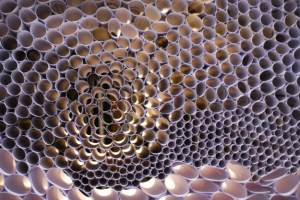
In the Temple of 11,111,117 Holes a novice lights a torch and enters the gaping mouth of the cave and the holes consume him. Each step requires great effort as though against a strong wind or into a place of great danger, its nature unknown and perhaps unknowable. In the center he stands and takes deep breaths before looking up into the millions of black eyes watching him, dissolving him.

This is when the greatest fortitude is required. Many before him lost their nerve, never to return, not free of emptiness but haunted by it. He regards the thin membrane separating one hole from another, its nebulous and transitory nature, as if existence is less substantial than nothingness. Paradoxes and riddles overwhelm the feeble abacus behind his eyes.

Some monks use a walking stick to steady trembling knees and accommodate greater depths of thought. Others criticize the practice, saying the holes would never give a monk more than he could tolerate, that to artificially enhance indulgences is a crime against nature. Brethren of the Stick say it is more unnatural to ascribe intentions to the holes. A third group dismisses both on the grounds that naturalness has never been established as a criterion of contemplation.

d7eab8aa95e6f2656d3e240b89f17b76--dali-paintings-bassett-hound

In Search of Proust’s Bassett Hound in the Library of Babel

Why Proust? It’s the sorcerous powers of description. You don’t need to keep a flow chart of the characters or study the Dreyfus affair. You want to read how the moon in the afternoon sky is like a beautiful actress who sneaks into the audience to watch a portion in which she does not have to appear. Virginia Wolfe said the best thing about life is reading Proust. That ignores some conspicuous contenders, but he’s the only writer who cracks the top five. There’s only one way it could be improved and you don’t have to feel like a Philistine for saying this.

1pLP7SV

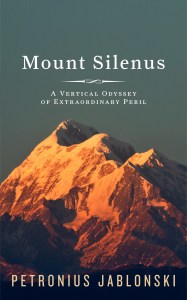
Mount Silenus: A Vertical Odyssey of Extraordinary Peril

Some say Fate cannot be fought, that it is entrapping as quicksand, omnipresent as the ether. Notice how the cleverest excuses and slipperiest arguments are used in defense of cowardice. Through capitulation to routine man dies an ignoble death long before his mortal coil makes it official. He forgets he is living. Combat is the supreme reminder. What is that putrid stench? Is it not the rot of man’s spirit, the smell of lies told to assuage the failure of those too craven to fight, smoke wafting from the languid den of routine addicts? To wage war against Fate one must locate the most auspicious outpost and launch an attack. That fortress is Mount Silenus. A battle calls. Warrior, arise.

Towering over you, a geological Rorschach absorbing the frustrations and dreams of a new species of ant chasing the wind up its sides, the 50,000,000-year-old distention of rock recently nicknamed Mount Silenus endures, aroused from the sleep of nothing by the same Source that concocted man, remaining at the orgy of existence on the same invitation. And when man is gone, regardless of how many crept across its sides, it will endure just the same, until it doesn’t.

packard-ave-1_jpg

Lay with Cudahy?

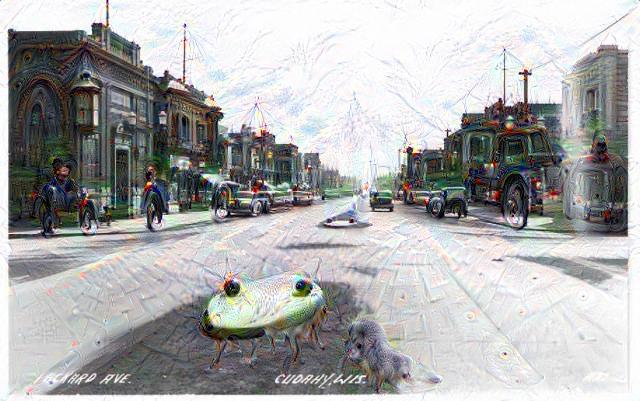
The gloomy, taciturn Dr. Harris, glaring at us through bifocals and removing them to intensify his sulphurous gaze, stroked his unkempt beard and shook his head when we proposed a joint independent study titled, A History of the Cudahy Taverns: Packard Avenue. We returned the following day to plead our case, wielding the deadly argument that his dismissive reference to Cudahy as “some small, blue-collar abutment of Milwaukee” was no less contemptuous than describing the Temiar of Malaysia (his dissertation subject) as a group of uninteresting savages with absurd religious beliefs. A twenty-minute session of furious beard stroking ensued, probably infested by the realization that we had actually perused his dreadful, meandering doorstop.

1398446928037.cached

Estimations

Purple People, seated under the purple lights in the Phil Zone like surfers of an eruption, we envy you on 12-31-80, the first Estimated Prophet of 81 and last of 80, the metaphysical glue of their connection. Focus on Phil during the Jam until some Helen Keller awakening shatters the shell of your mind and reveals to the stunned hatching within a world beyond all wonder. The intrinsic peculiarity of the song is never covered by the gray blanket of familiarity wrapping most things. It’s as different and mysterious and off-the-wall and triumphant and creepy as the first time you heard it.

NosferatuShadow

Serial Killers Who Worked Security

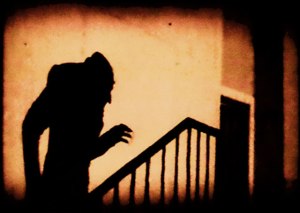
Why are there no paralegals moonlighting as Grim Reapers, no librarians driven to carnage by inquiries about Dan Brown? Security fields a disproportionate number of the empathy challenged. Practitioners of this noble calling succumb to dark nights of the soul, wondering if the property they defend requires blood to sustain its existence. Why is it always the loners? What happens in the cold vacuum of solitude, time spent with the ultimate stranger? Consider ten instances of this cruel occupational hazard and wonder why “going rent-a-cop” never joined the lexicon.

Mount Silenus - High Resolutionthe-annals-high-resolutionSD_eBook_cover9959179d-d3f4-4c80-

Petronius Who!?

Standard
Existentialism, Literature, Ontology, Truth

The Book Party

A room without books is like a body without a soul.   Cicero
b8b3fab85d93e902e24039a6a5f2f288

“It’s the purple building with the domed roof, a few blocks down on the right side,” the attendant said before I could open my mouth. Oil stains covered his uniform like continents on a globe and his rolled up sleeves revealed huge but flabby biceps.

“It?” I said, not used to mediums plying their trade in this line of work.

“The book party,” he sighed. “I must have had fifty people stop in here and ask me about it since noon.”

“Book party?”

“Yeah, look at your invitation.” He retrieved a green three-by-five card from beside the register and tapped an elegant sketch of the structure with a greasy finger. “Some guy left his here.”

“Utterly fascinating,” I said, trying to decipher the black enamel calligraphy. “But could you tell me how to return to the interstate?”

“It figures,” he said, shaking his head in defeat. He gave me directions and I asked if the party was invite only.

“You can have this one. The guy who left it hasn’t been back in hours. With all the people that come and go it can’t be too hard to get in.”

“Who is the perpetrator?”

“The what?”

“The featured author.”

He blinked.

“When did it begin?”

“I’ve been working here over six months and it’s been going on since then.”

“What manner of book party lasts that long? Few merit six seconds of celebration. Most should be inaugurated by a requiem. This one must feature a different work each night.”

“You got me. But it’s a strange crowd. You should see some of the people who stop in here for directions. Most of them are pretty flaky. But some of the women — You wouldn’t believe it.”

“They are drawn to exhibitionists like peahens to peacocks. Whether it is a hirsute guitarist, a steroid-addled gamesman, or a pulp-excreting word-processor jockey makes no difference.” He crinkled up his nose as though blinded from the light of my analysis. “You have been most helpful,” I said before returning to my car.
tumblr_oop180Beh71w5aqwto1_500

“Lost indeed.” I handed Sandy the invitation. “I wanted it to be a surprise. We have found the literary nexus of the world, a fête without end.”

“What book is it for? The invitation doesn’t mention the book or the author.”

“This is a top-secret affair,” I said, heading for the domed building.

“I’ve never seen a great novelist.”

“Nor shall you, absent a time machine.”

“I meant famous.”

“I will catch you if you faint.”

Upon entering we walked through a long limestone passage. Smooth slabs gleamed from Chinese lanterns. We emerged in the humbling vastness of a dark marble lobby. A huge window looked out on a pond at the foot of a hill covered in dandelions. Dwarfed by a statue of a zebra perched upon one leg, two men in white suits and matching visors circumnavigated the pond with the speed of a minute hand, staring intently at it. After a prelude to eternity, one pointed to the surface. His comrade ran to his side. They took turns framing it from different angles with their hands, looked at one another, and nodded. One picked up a metal pole with wire mesh on the end and scooped something out and gingerly laid it on a tray. He put the pole down and they resumed their encirclement.

Sandy tapped my shoulder. Opposite the window, seated in a folding chair, the lobby attendant faced the wall. I shrugged and walked to the door across from us, its existence only discernible from a silver knob. Like a man poised to tour Bedlam, I paused before opening it, bracing myself for encounters with MFA students, free-verse poets, English “majors” unfamiliar with Shakespeare, and worse. Sandy watched the aloof attendant. Above her, the ceiling spread to uncertain dimensions, as though something was leaking out, or, more ominously, Nothing was trickling in. She looked to me, puzzled, then to him, concerned. I jerked my head, imploring her to follow.

The smell of strawberries overwhelmed us. Lavishly attired literati crowded around three tables disappearing into the abyssal depths of a narrow room. Their whispers accrued to the hiss of a deflating tire. Unable to sneak a glimpse of what digested their attention, I assumed that a plague of novelists were diligently signing their latest exudations. We choreographed an elaborate dance through the gathering to arrive at a tiny bar in the corner. The bartender hunched over to avoid scraping his head on the ceiling. Thin brown hair plastered to one side matched his leathery complexion. Eyes dead like a shark’s stared into the crowd. In the distance between his shoulders stood three patrons. Sandy gasped at the sight of a zebra pelt mounted behind him. The green clock in its center had blue Roman numerals but no hands to mark the minutes or hours.

“Excuse me,” I said. “What book is this for?”

As though a hand inside it tensed to catch a ball, the bartender’s face contorted. “That book,” he hissed like a serpent provoked, pointing to the tables.

Revelation: the people crowded around the tables were reading the book. The pages must have been spread sequentially across them. “So much for fruitful miracles in the midst of solitude,” I said. “Are you selling hot dogs? Are there any cheerleaders?”

“Are you trying to make a joke, sir?” a pudgy little man beside me asked. Like most of the male literati, a Fu Man Chu beard garnished his face. Flaunting rubicund cheeks, his ponytail constrained long dark hair. A baggy paisley shirt tucked into tight jeans tucked into cowboy boots. He and the bartender vivisected me with their eyes.

“Who is the author?” I said.

The bartender shook his head in disbelief, perhaps disgust. The little man squinted at me like he had discovered a precious jewel. “Sir, the book is not finished. And it has no author. How could you not know this?”

“I am acquainted with the noxious trend of denying that books have any fixed meaning, but this must be something new. How exciting.”

He stood on his tiptoes and put his mouth to my ear. “You came here thinking the book has an author?” His hand covered his mouth and his eyes extruded. “He’s only joking,” he told the bartender. “Drunk as a skunk. Fix me another. I’ll take him outside for some air.” Sandy and I followed him to the lobby. “My name is Cletus Empiricus,” he announced, vigorously shaking my hand while engaged in a staring contest with Sandy’s chest. I could scarcely begrudge him this enchantment. Those sweet, ripened, succulent, luscious fruits of the Orient had brought me more bliss than a fête of real writers could describe with a million sonnets. “You weren’t joking about thinking the book has an author,” he said, diverting his gaze. I shook my head. “Mr. Jablonski, the book comes from the pond.”

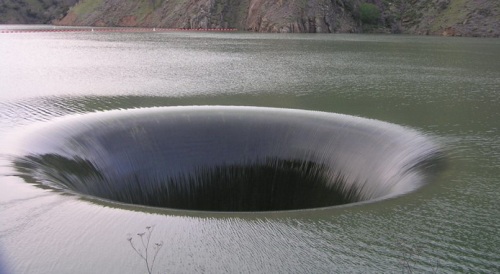
“You mean that pond?”
hole1

“Correct. Do you see those men? The pond is filled with tiny letters. They search for words or phrases. Sometimes they find complete sentences. They scoop out the words and put them on a tray. When it’s full they bring it inside and put it on the table. This isn’t like other book parties. It celebrates the book as it’s written.”

“What’s it about?” said Sandy.

“That depends on who you ask.”

“That depends on whom she asks,” I corrected, following the wise principle that it is never too early to establish dominion in a conversation.

“Some people are quite taken with it,” he said with a shrug.

“How do you like it?” I asked.

“I was ambivalent, but I’ve grown to hate it,” he said, as though delighted to answer the question, perhaps hoping to influence our opinions. “Can’t deny it’s technically well-written, teeming with interesting characters, lots of action, complex themes.” He sniffed his drink and stared at the pond. One man pointed to the surface while his partner brandished the pole.

“But?” I said, severing his trance.

“But all the surface activity can’t hide the hollow ground underneath it.”

“Could you phrase that so someone who has not spent his life chasing the wind after an advanced English degree can comprehend it?”

“At least he declared a major,” said Sandy.

“I will declare it as soon as they remove symbolic logic from the requirements. Did Socrates torture himself with those absurd squiggles?”

Cletus smiled, drank, rubbed his chin, and said, “There are so many tiny pictures you hardly notice the lack of a big one. But once you do, the tiny pictures don’t interest you.”

“Sandy, go fetch an English undergrad to translate.”

“I know what he means, and there’s something sad about it: interesting small things trapped in a meaningless, authorless giant thing.”

“Exactly. That’s exactly why I don’t like it.”

That they were on the same wavelength fascinated me. In my demarcation of the circles of benighted academic pursuits, communications occupied the lowly fifth circle, four full circles below English. Exchanges between them should have been impossible.

“The underlying hollowness compels a lot of people to either force the story into some interpretation they’ve cooked up, which is like trying to get an elephant into a straightjacket, or they say the pond has mysterious powers that guide the writing. That way it’s always possible the meaning is hidden or not fully revealed.”

“Why is that so hard to believe?” said Sandy.

“Look at it. It’s a scummy little pond with millions of letters floating around in it.”

“But it’s writing a book,” she said.
title

“You have to judge an author by what he, or it, writes, not by what you think they could.”

“Fair enough,” I said. “Aptitude is obviously irrelevant to literary matters, if not all matters. How long is the work?”

“Too long. It might be repeating itself thematically, but it’s so long this is hard to verify. It just rambles on and on and on and on,” he said, bobbing his head to accentuate his aversion. “One damn thing after another.”

“When will it be finished?” I said.

“No one knows. Those men out there just scoop out words. They aren’t proofreaders or editors. There are no editors. There’s no one to say when the whole silly mess is over.”

“But the fact that it’s all being created by a pond is incredible,” said Sandy.

“The regular use of alliteration, anadiplosis, and anaphora has been convincingly explained in terms of the consistent breezes stirring the water. Patterns arise.”

“But the structure, the complexity of –”

“If it were my book I’d be ashamed of myself,” Cletus said, throwing his head back. “I would only publish it with a pen name to make a quick buck.”

“Then why do you come here?” said Sandy.

“One, the drinks are cheap. Two, the chicks.” Cletus winked at me. “Don’t get me wrong. Once in a while the book has its moments. Hell, once in a while it’s great. It’s just that overall it’s nothing I’d put my name on.”

“Have you ever written anything?” said Sandy.

“No. But he has,” Cletus whispered, pointing at the lobby attendant.

“Why is he facing the wall?” I said.

“He’s jealous.”

“Who’s he jealous of?” said Sandy.

“Of whom is he jealous,” I corrected.

“He’s jealous of the pond. He’s the most frustrated writer who ever lived, at least that’s what he’d like you to think. As the story goes, the books he’s written have an underlying significance that ties everything together in the end. But his novels fall stillborn from his printer while people stand in line to read a foofaraw written by a scummy pond. That’s why he sits facing the wall. He can’t bare to look at it.”

“A foofaraw? May the gods deliver me from all English majors.”

“At least they don’t think they’re smarter than everyone,” said Sandy. “Philosophy students are the worst.

“Why doesn’t he pursue employment elsewhere?” I said.

“The money’s probably good, and of course, the perks.”

“Such as?”

“Mr. Jablonski, you’ve been inside the other room. They come through here, see him all despondent, ask him what’s wrong. That’s when it starts getting deep in here — if you know what I mean. They bring him drinks, ask if there’s anything they can do, and one thing leads to another. You know, I’ve thought about pulling up a chair next to him. In a sense he’s one of the most successful writers of all time.”

Sandy gave him a quizzical look.

“Forget all that junk you’ve heard about literary ambitions. It’s a veneer. The brooding genius routine is an act they go through to appear mysterious and sensitive. The tormented writer shtick wreaks havoc on a woman’s compassion.”

“That’s not true of all writers,” Sandy said.

Her literary judgment devastated by a diet of “commercial fiction” (a euphemism for graceless drivel about the basest instincts unfolding in clichéd situations), she thought highly of both the perpetrators and their motives. Having had several of her favorite novels inflicted on me, I conceived a hypothesis concerning their origin: those authors must have secret ponds of their own. Such work is not the product of intelligent design, but mere randomness. The prose itself is what one would expect from letters drifting aimlessly in a pond. The numbing regularity of the themes (coming of age, the indomitable nature of the human spirit, who killed whom, a journey filled with conflicts, etc.) are explicable in terms of the same natural forces that create regularities like tides, eddies, and whirlpools in larger bodies of water.

“Don’t be fooled,” said Cletus. “The difference between what he’s doing and slipping your date a knockout pill is a difference of degree. Some writers are craftier than others, but deep down they’re all the same.”

tumblr_mkk1h63hEP1s3g4dwo1_500

“Don’t listen to him,” said the attendant. The wall muffled any inflections his voice contained. “He doesn’t understand. To write a book is to pour your soul into a canyon.”

“Here he goes,” said Cletus. “He’s practicing one of his pickup lines. I need a drink. Come to the bar when it gets too deep in here for you.” He put his hand on my shoulder. “Take a good, long look at the book. Decide for yourself.” The hissing of the crowd filled the lobby before he closed the door.

The camouflage of the attendant’s dark hair and jacket fostered the illusion that the wall was speaking. “An echo may ring through the canyon and the people below will look up and see who shouted. But even the clearest voice can only echo for so long. Soon it will fade, absorbed by the rocks, and the canyon will be as quiet as it was before. This is true of the greatest shouts. For most, they are lucky if their voice echoes at all or if anyone looks up.”

I cleared my throat, reflected on the greatness of Pericles, and began an oration that would change his life. “Cletus and yourself may think otherwise, but over the course of conquests innumerable I have found that an air of supreme self-assuredness is the most powerful aphrodisiac. Whining about your failures may occasionally net a stray mongrel, but if you wish to mount the prize bitches you need to project confidence. Your very being must radiate strength and –”

“What the hell is wrong with you?” said Sandy.

“Disregard this conversation. I am speaking as a man to one aspiring to that status. May the gods strike me dead if my father did not say the same words to me. Perhaps the fiery rhetoric offends you, but it is necessary for inspirational purposes.”

“Just stop it or I’ll call Dave to come and pick me up.”

“Your ex. Speaking of aspiring to a manly status. Very well. Cletus told us you are an accomplished author.”  

“I wrote several books,” the wall said. “Their shouts were great and clear, but none of them echoed.”

“Why does every shout not echo?” I asked, which seemed like the proper question. Even if his detestable strategy proved successful in practice, it was grievously wrong in principle: a man must never forge inroads to a woman’s maternal instincts, only her carnal ones.

“Clarity does not entail volume,” the attendant said, coming back into focus and sounding perturbed. “And a great shout does not connote a loud shout.”

“Why is writing a book the saddest thing in the world?” said Sandy.

Because the foredoomed paths of solipsism, megalomania, and self-abasement intersect in the depths of Abaddon, I thought. And the injudicious use of metaphors and similes leaves the writer with irreparable brain damage.

“Where do all books end up?” the wall said as the lobby attendant faded from view. “Moldering on a shelf, packed in a box, abandoned and forgotten on a hard drive.”

This routine indubitably cast him as mysterious and sensitive. But to what abysmal depths has civilization plunged when sensitivity is a trait willfully sought by a man?

“So you don’t write anymore?” said Sandy, falling prey to the loathsome vice of pity, in accordance with the attendant’s strategy.  

“I do. But my books will not be subjected to burial on shelves or in boxes. They end up underground.”

71fv6wj6VEL

ANNALS Web Ad

“And underground is a metaphor of what?” I said. Ask a writer for the time of day and you need an Enigma machine to decrypt the answer.

“It’s no metaphor. I literally bury them. Six feet deep.”

“No one ever reads them?” said Sandy.

“If there are no echoes you never have to adjust to the awful silence that comes when they stop.”

“That’s so sad,” she said.

“No, it is natural.”

“The Kafka gambit,” I laughed. “You are aware, I hope, that he did not bury his books; he asked a friend to burn them. Clearly you are unaware that his proficiency with the ladies was not exactly –”

Sandy turned to me, only the whites of her eyes visible. An arctic breeze blew through the room. “I won’t tell you again.”

Piqued, I looked out the window and watched the peculiar fishermen.

“But perhaps it is only outrage that leads me to this.”

“But it can take years for a writer to get recognized,” Sandy said. “You should be proud that –”

“Not that kind of outrage. I’m outraged that where a book ends up is a far better place than where other things do, that even the worst book has the potential to exist longer.”  

“What other things?”

Go and sit on his lap, I thought. How much further can he debase himself? What final act has he planned for this play of helplessness, this self-degradation, this sensitivity? Will he now curl into the fetal position and weep?

After scooping several words from the pond, the men lifted a silver tray at least six feet long and four feet wide. Their cautious handling would have sufficed for an atomic bomb. The man in front held it from behind and they marched with synchronized steps. I flirted with the idea of pounding on the window to measure the depth of their concentration, but I suspected the book’s fans might not view my behavior as a lighthearted prank. Cheers erupted from the next room. The attendant began to sob. Sandy pressed her lips to my ear. “Let’s go read some of it.”

“Of course. I’m going to fetch my notebook. Save me a place in line.”

Excerpted from Jablonski’s Magnum Opus

rna-world

Petronius Who?
Standard
Climbing, Existentialism, Nihilophobia, Quietude, Sloth

Everest? Big Whoop!

Mount Silenus, Destroyer of Illusions

6ea3e6a7b4d880df1434756b6328d892

“A surreal existentialist crisis” Publishers Weekly

“The mountain is nothing more than an extra hilly hill,” you say, cringing. “I was letting a word freak me out. If you don’t tame their power they control you.”

Positive thinking is a Reese’s Peanut Butter Cup of hubris and stupidity. Try taming cyanide. The perils inherent to things exist independent of our descriptions and attitudes. Wolverines for instance. And Oxycodone. And mountains.

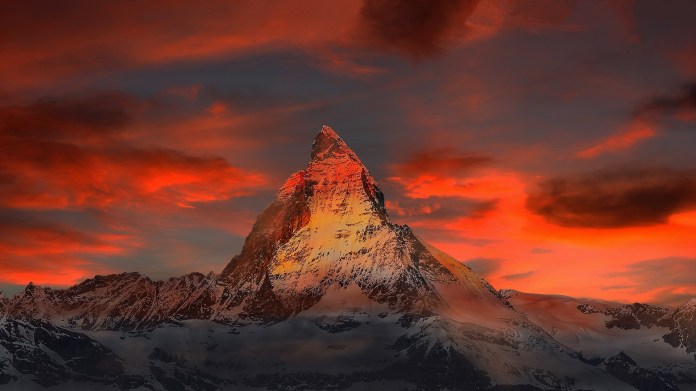
You walk on. Silenus grows faster than you’d expect given your cautious pace, as if clawing at you. An abstraction flickers to life: 20% of climbers take up permanent residence here, which means hundreds of breathing, eating, farting, laughing, beer-drinking, poker-playing men DIED here. They forever ceased and desisted from breathing, eating, farting, laughing, drinking beer, and playing poker courtesy of what you’re about to commence. These were not suicides. They were trying every inch of the way to avoid this irreversible and often unpleasant transformation. Then what happens? Welcome to the concrete reality of this question.

The clouds expand and diminish and the sky sheds a grimy exoskeleton to reveal an orange heart pulsing within a vast creature of which you are a mere cell. The sun pools on the snow like orange juice.

The sun, what is it?

In all your meanderings and voyages you’ve never stopped and gawked at the bone-chilling peculiarity of this. Is the existence of Existence humdrum and self-explanatory, or do these questions open empty chambers no free samples from Dr. Schlotski can fill?

switzerland-862870_1920

Based on a disastrous attempt

And you, what are you, and where? That mysterious theatre behind your eyes and between your ears, what perpetuates its dynamism?

“I’ll tackle it tomorrow when the weather’s nicer. I need to get an earlier start. Timing is of the essence.”

In a world where no consensus exists on its creation, who can say with certainty that guzzling champagne in the bath is not the greatest accomplishment in life? Return to your kingdom. Silenus will wait.

Mount Silenus - High Resolution

A Vertical Odyssey of Extraordinary Peril began as therapy for Post-Traumatic Mountaineering Disorder (PTMD). Some events never recede on the horizon of Time. Dismissing them as the past is wishful thinking. That they occurred before other things is a trivial property, incidental and irrelevant to the sovereignty they wield. Jablonski filled hard drives with descriptions & analyses of what happened, then projected it into the eyes of characters spanning centuries.

1pLP7SV

Enter The Abominable Unau

Standard
Existentialism, Ontology, Security, Truth

Serial Killers Who Worked Security

A Mysterious Link Explored

NosferatuShadow

Why are there no paralegals moonlighting as grim reapers, no librarians driven to carnage by inquiries about Dan Brown? Security fields a disproportionate number of the empathy challenged. Practitioners of this noble calling succumb to dark nights of the soul, wondering if the property they defend requires blood to sustain its existence. Why is it always the loners? What happens in the cold vacuum of solitude, time spent with the ultimate stranger? Consider ten instances of this cruel occupational hazard and wonder why “going rent-a-cop” never joined the lexicon.

samourai

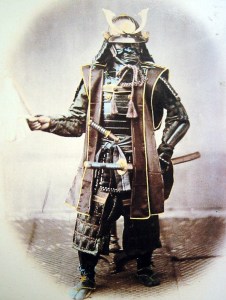
“I hate guards who fall asleep on the job and don’t perform their duty”

With an honor code familiar to samurai and superheroes, Bangkok guard Wittaya Jaikhan snuck away from his post to hunt slumbering comrades, killing seven, becoming the Watcher of Watchmen, Guardian of Guards, Slayer of Sleepers. Our motives are never as pure as we believe. He also took their chocolate and phones. We are not justified in assuming that madness is the best explanation. The West has had no understanding of Honor since WWI. Historical myopia hides Jaikhan’s perspective from us. By bringing shame to his vocation, the snoozing guards brought dishonor to him. You may be okay with that. Don’t speak for others.

BLT

Dennis Lynn Rader, the BTK killer, worked for ADT 

The acronyms will give you PTSD. He was as poor at coining them as his company is at informing guards of alarms. Was the B necessary? This is minutia, not substantive information. We assume some means of incapacitation was used, that his victims did not transcend their hard-wired response to pain on his behalf. That leaves us with TK, which is little better than Chokey or Hurty. (It’s not clear he needed the K either, since we can see the final result.) This narcissistic diva distracted attention from the QWERTY killer, UTI killer, and FDDBBFTBH killer, who struggle in vain for their fifteen minutes.

flag5

Corporal Urinalysis

A grain of sand irritates an oyster to create a pearl. With humans all bets are off. Andrew Urdiales killed eight women and counting. In the Navy they called him Corporal Urinalysis and wouldn’t follow his orders. They called him Corporal Urinalysis. He had facial tics and less than awful social skills. If you believe all God’s creatures have a purpose you’ve got your work cut out for you. Most of these men were slated to be recipients of ridicule and conduits of fury. Did you ever make a conscious decision not to become a serial killer? Those philosophical head-trips about free will have obscenely physical instantiations. If you don’t choose your thoughts you don’t choose anything. You don’t choose your thoughts. Were Uriales’ security shifts a fortress of solitude or a hall of mirrors where Corporal Urinalysis leered from every direction? How long before you’d smash the mirror?

ROC00581

Tiago Henrique Gomes da Rocha killed thirty-nine people to treat his anxiety

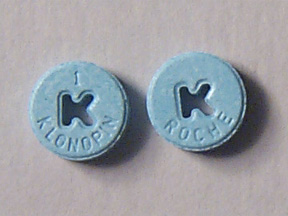
Proceed with caution when judging a man poisoned by cortisol and deprived of its antidote. This could have been prevented by a script for Klonopin: vitamin of Stoics, Viagra for stiff upper lips, pink slip for Mr. Gives a Shit, spinach for nervous guards. Not incidentally, the wicked stereotype of alcoholic guards comes from self-medication for a constant state of fight or flight.

pinuppictures8

Ted Bundy 

He blamed his urges on pornography. It’s always hidden beneath the Soldier of Fortune, next to the handcuffs you aren’t supposed to use, atop the SECURITY MANUEL, across from the half-eaten bag of Fritos no one has touched for three years but you hope the new guard does just to see if he survives. Like Bundy, security guard Neal Falls had victims who all looked alike. They say routine is the anchor of life.

external

Steven Alexander Hobbs, the large red-headed guard

What vicarious atonement did the fifteen prostitutes represent? Were they sacrificed as substitutes for cubicle-dwelling women who treated him with disdain, like his job was a Wiffle job, his life a Civil War reenactment? Ginger-themed taunts do not recede on the horizon of Time, where it’s always third grade. The indignities guards endure come with compounding interest. The harder you try to catch up the further you fall behind.

73_SimonGarfunkel

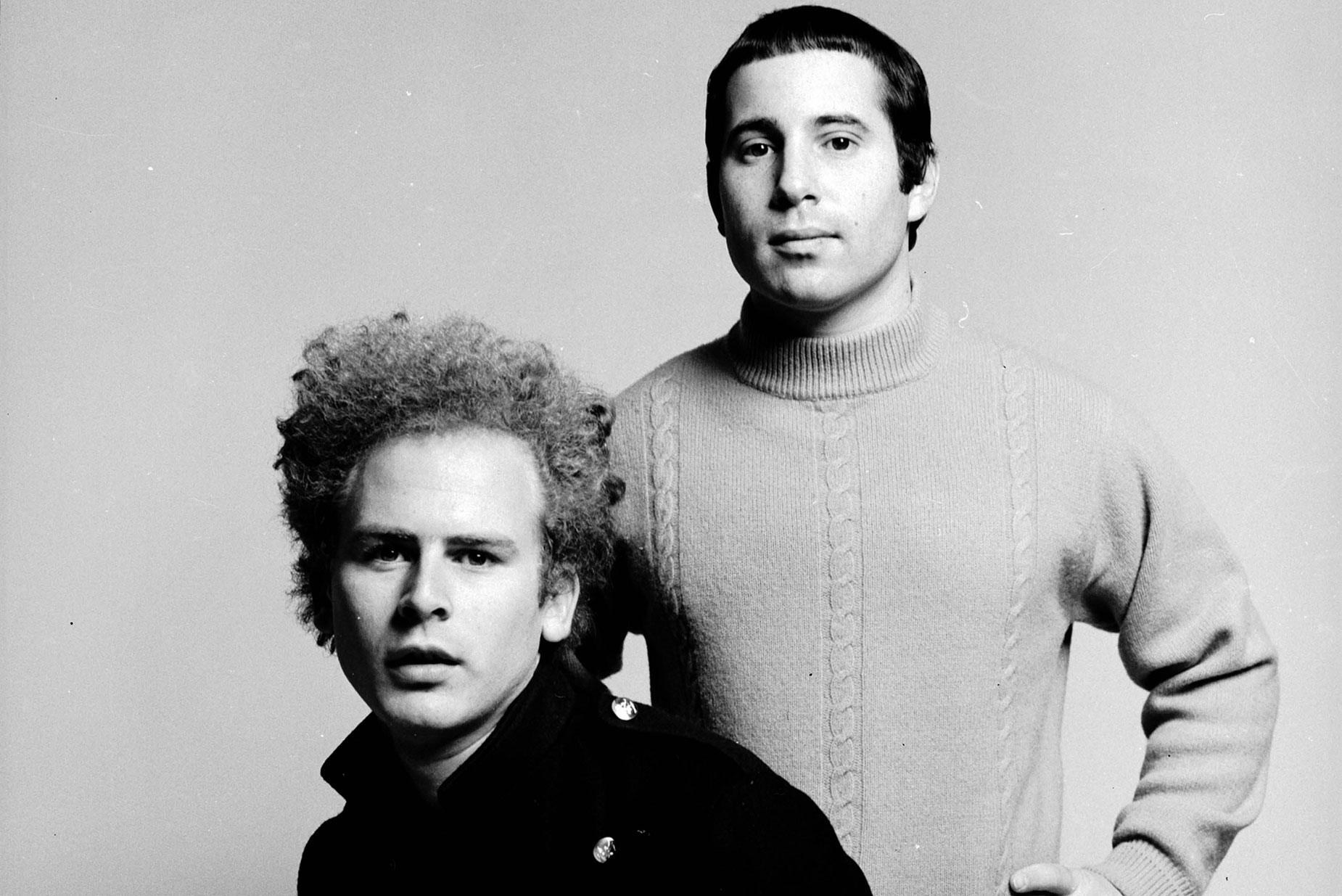
Kenneth Bianchi, Simon to Angela Buono’s Garfunkel

The Hillside Stranglers toured California in 1977 with a van that may as well have had FREE CANDY painted on the side. Bianchi attained the Holy Grail of security: an in-house position at a jewelry store, free from polyester uniforms and reliefs who don’t show and companies who make $20 an hour while paying you nothing. When he gave jewelry to girlfriends he lost paradise and settled for the Whatcom Security Agency. The mysterious springs of the heart are unwound by less. Some said he had company in the attic. Multiple Personality Disorder was the flavor of the day. Here’s a secret. All guards do. Their exquisitely honed instincts become distinct and incompatible like Greek gods. The most ruthless prevails. Shhhhhhhhh.

Devil-Camera1-200x200

They don’t sport horns or a scarlet SK

Rodney Alcala was “the devil. He’s very personable, good-looking. It’s easy to get in with this guy. He likes women with good shapes. He convinces them to let him take their photos.” A serial killer’s success is a function of camouflage. Remember that. Putting victims at ease by appearing to be something else is a screwdriver in Nature’s toolkit, like the hungry fish that looks like a rock. Primates do it too. A high IQ sans moral radar acted like a turbocharger for Alcala. His victim count remains unknown. And he brought a popular hobby among guards into disrepute. Don’t take your Nikons to work anymore.

Hammersmith_nude_murders_suspect_identikit

Britain’s worst serial killer may have been a guard

And Scottish. Jack the Stripper killed a parliament of prostitutes. His suicide note said he was “unable to take the strain any longer.” A recent study may shed light on his sorrows. “They found that shift work was associated with impaired cognition, and the impairment was worse in those who had done it for longer.” It ages the brain. Remember your grandfather’s obscene tirades when he lost his dentures? Imagine that frame of mind transplanted into a young man. Don’t judge him until you’ve slouched a mile on third-shift.

It’s not the news that any shift worker wants to hear. Not only is working irregular hours bad for your social life and likely your health, but it has a chronic effect on your ability to think, a new study has found.”

joseph_ferguson_000

Misfortune comes in threes

A lady guard broke Joseph Ferguson’s heart. Then his rent-a-cop slavemaster fired him while he grieved. Then he didn’t pace himself and became consigned to the footnotes as a lowly spree killer. Where would we be without profilers and their arcane taxonomy, without men who keep a straight face as they inform us the profile is a white male in his twenties, as if we would have assumed an elderly Asian woman was to blame.

***

What crimson thread links them? Does an aptitude for solitude predestine one to infamy? Perhaps silent shifts are petri dishes where life’s indignities mutate and grow. (Theories about postal workers suffering from “golden handcuffs” are equally plausible.) Unarmed security is the most dangerous job in the United States. The authority it gives is not proportionate to its perils. The authority is an illusion. A guard has no more legal power than a common citizen. They’re sitting ducks and accountable for everything that occurs on their watch, the worst of both worlds. What are the long term effects of cognitive dissonance?

“The final total for workplace homicides in the United States, from 1990 to 1999, stood at 508 security guards slain in the line of duty and 495 police officers, and detectives, slain in the line of duty. In just one decade private security guards had surpassed even law enforcement officers in the rate of workplace homicide – an ominous occupational indicator for all those in working in the private security field. In the year 2000, the dangerous trend in violence would continue with another 46 security officers murdered in the line of duty. The same year witnessed an occupational homicide rate for public police officers and detectives of 35 killed by criminal assault or ambush.”

To begin a campaign of social justice for guards, to stop the killing, begin by addressing them as Safety Technicians.

Incoming, before the final sentence could be typed: Khalil Wheeler-Weaver, Guardian of Grocery.

***

“Driving, page-turning force” Publishers Weekly

    Schrod_dox_ad_big_dog

Spy by night, blogger by day, Zelda Alpizar becomes infected by a contagion known to civilians as guilt, forcing her to choose between following orders or intervening to save two watchmen. Their trance-like lethargy makes them the ideal storage drives for a detonation code. Decrypting it could have lethal side-effects. Though the most important thing Zelda will ever find, the boundary between good and evil is of little value in a place where the only legend reads Here There Be Monsters.

Security guards, harbingers of dawn, are they not warriors? Beneath the polyester Travis and Alex consist of flesh and blood. A predator stalks them, more implacable than skateboarders. Putting your tax dollars to work, the NSA discovers that human storage devices offer greater security than digital ones. Dead drives tell no tales. Like all their secrets it’s soon available to the highest bidder. When Zelda infiltrates a secret society lending this service to terrorists, she sees how the private sector can be almost as wicked and incompetent as the government.

They should have chosen a more secure password. “Mary Weatherworth” is also an adult actress beloved by security guards, and an urban legend reputed to appear in mirrors when summoned thrice. Busy lady. This ambiguity entwines discrepant parties in strange ways. Connected to them all by one degree of separation, the sausage link in a karmic chain, Maestoso the Dachshund waddles across this remorseless battlefield, observing the chaos, perhaps resolving it. Avoid eye contact. You don’t want him inside your head.

Watchman and the Mystery Box

Gus Sanders: Greatest Guard Since Plato

Phenomenology of a Security Guard

Standard
Existentialism, Literature, Quietude, Truth

Great Irish Writers with Polish Names

GIWWPN found Celtic Consciousness in likely places. Turn on, plug in, pass out, and see how it’s clovers all the way down. In 2017, GIWWPN considered Mount Silenus: A Vertical Odyssey of Extraordinary Peril as one of two finalists. In 2018 they awarded the coveted Genius Fellowship Grant to Petronius Jablonski “not for previous art but as an investment in his future.”

green-grass-landscape-photo-wide-pc

GIWWPN salutes Jim Morrison for his most underrated song: Land Ho! Hear him discuss his proud Irish heritage.  Humor is the key to our survival. And dancing.

5689198532_8355e109cb_m

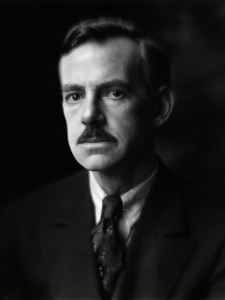
GIWWPN acknowledges the greatest playwright since Shakespeare. To the Irish, Long Day’s Journey into Night is a comedy about a functional family. (Seeking info about the production with Philip Seymour Hoffman. Any bootlegs?)

ONeill-Eugene-LOC

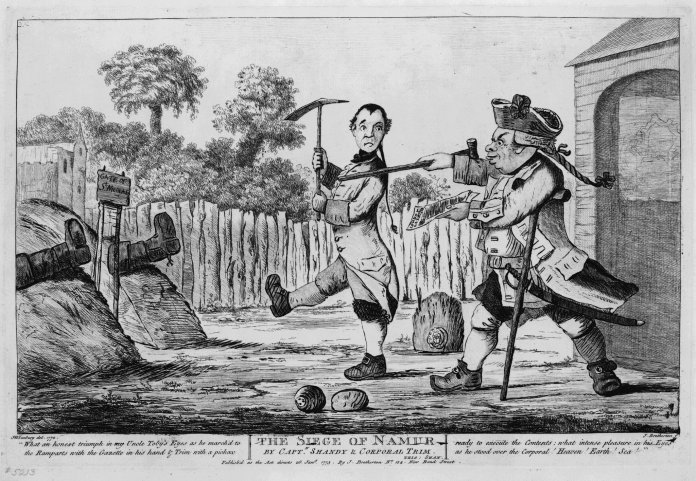
GIWWPN celebrates the greatest novel ever writ, Tristram Shandy, Joyce’s ladder, Schopenhauer‘s favorite: “A novel will be of a high and noble order, the more it represents of inner, and the less it represents of outer, life; and the ratio between the two will supply a means of judging any novel, of whatever kind, from Tristram Shandy down to the crudest and most sensational tale of knight or robber. Tristram Shandy has, indeed, as good as no action at all; and there is not much in La Nouvelle Heloïse and Wilhelm Meister. Even Don Quixote has relatively little; and what there is, very unimportant, and introduced merely for the sake of fun. And these four are the best of all existing novels.”

C5xJGGaWgAA-p9m.jpg large

GIWWPN trips on experimental fiction because we Irish invented it. Visit the Post-modern afterlife in  The Third Policeman by Flann O’Brien.

1e82134d8cb59fc62bde47a8e98517e6

GIWWPN places Maeve Brennan in the same pantheon as Chekhov. Why haven’t you read her?

C6Z_lnmXQAA7hnP.jpg large

GIWWPN finds prophetic descriptions of modern Academia in Gulliver’s Travels: Cucumber Studies.

C5-B2tdVUAE1-zs.jpg large

GIWWPN reveres a visionary. He was deeper than we’ve been led to suppose.

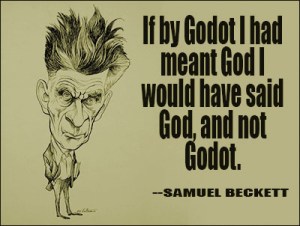
samuel_beckett_quote

GIWWPN embraces the realism of Yeats: “Being Irish, he had an abiding sense of tragedy, which sustained him through temporary periods of joy.”

8904_1451794_hr

“The History of Ireland in two words: Ah well.” – Niall Williams  (See these for details.)

Standard
Existentialism, Fatalism, Ontology, Truth

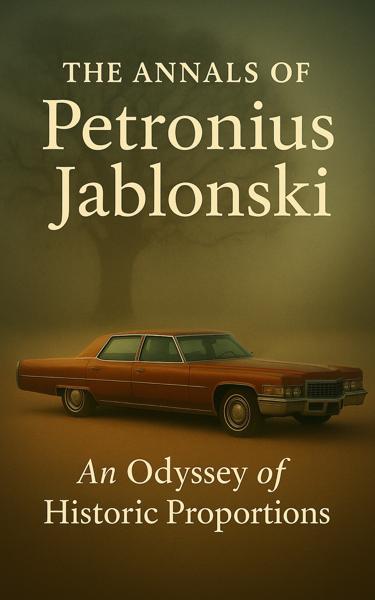
An Odyssey of Historic Proportions and Priceless Treasure of Philosophy

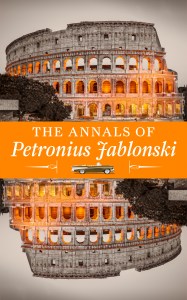
Jablonski’s writing “employs secrets and intrigue as a driving, page-turning force. … [He] is able to inject a sense of immediacy and intensity in the story by using sparse description that suggests more than it tells. An engaging narrative.”  Publishers Weekly

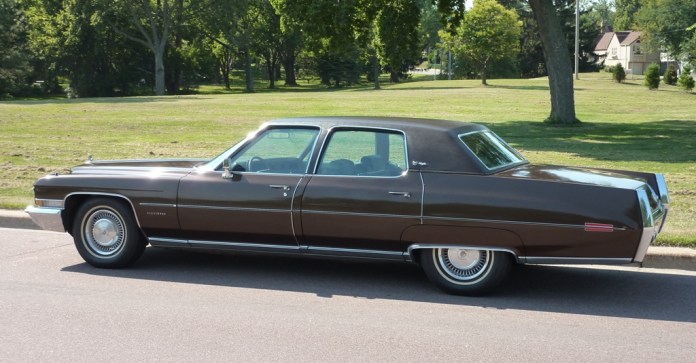
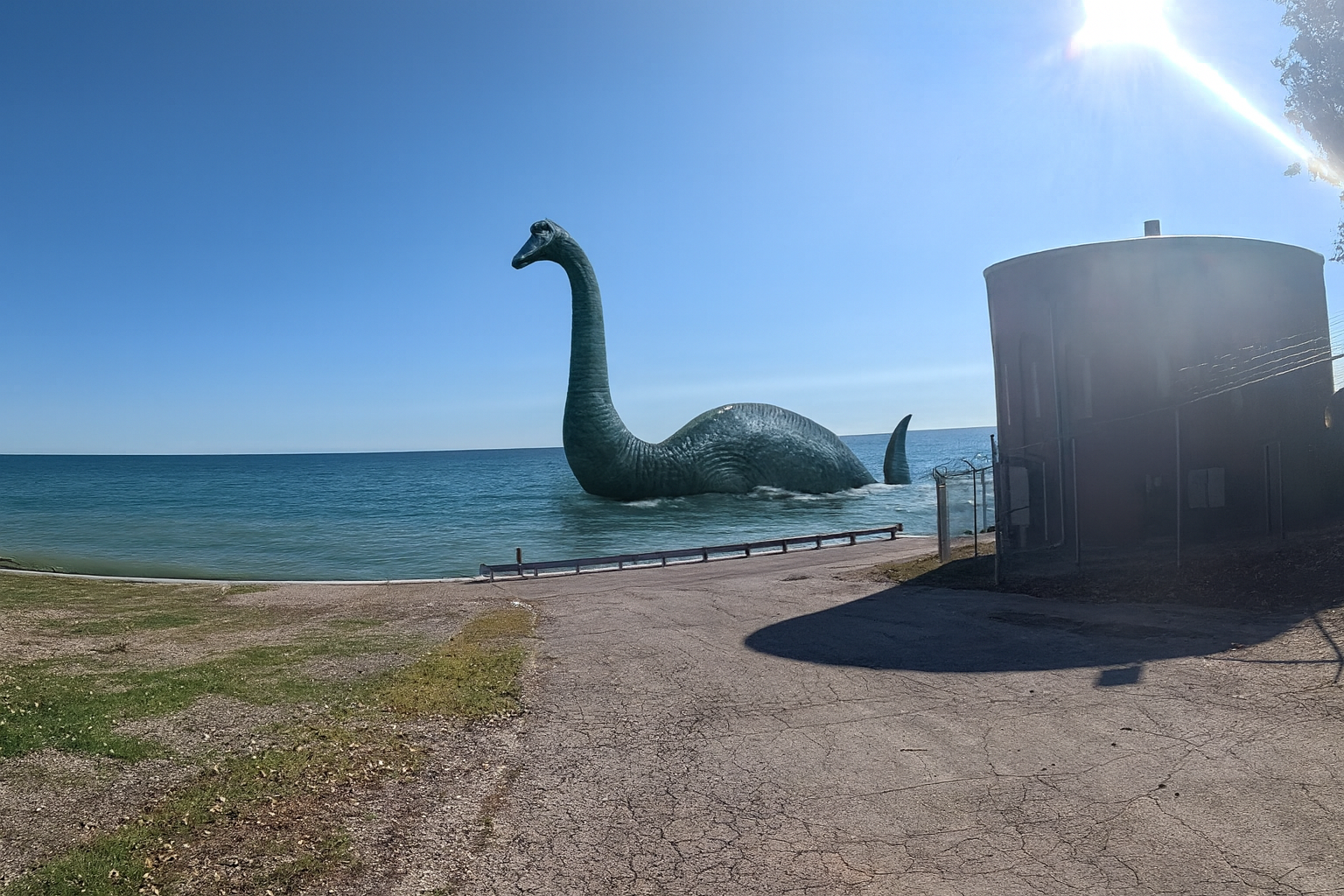
When his classic Pontiac is abducted by a deity who lives in the depths of Lake Michigan, Petronius Jablonski is offered Enlightenment in compensation. To obtain it he must decipher the coded features of an odyssey. He neglects to share these minor details with his longsuffering girlfriend, Sandy, who accompanies him. Home-schooled by an eccentric father, Petronius holds the modern world in contempt, the demise of polytheism and eighteenth century English in general, the plague of democracy and “internets” in particular.

Despairing of his ability to understand the journey and rarely paying attention, he engages the Reader’s assistance. His propensity for digressions complicates the search for a solution while making a mockery of first person narration. He anticipates absurd questions and adds chapters in response, he accuses the Reader of being smitten with Sandy and makes her less attractive, and he revolutionizes Western thought [sic] with the paradigm-shattering contributions of Petronius’ Shovel©, Petronius’ Blender©, the Mushroom of Consciousness©, Schadenfreude Before-the-Fact©, Quietude©, and Petronius’ Garage©, each exceeding in momentousness Occam’s dull Razor, Plato’s much-ballyhooed Cave, Aristotle’s overrated Golden Mean, and Russel’s leaky Teapot.

As he subjects the Reader to increasingly demanding prerequisites it becomes clear he is wandering the remorseless hinterland between genius and madness, which raises questions about the accuracy of his chronicle. Sandy’s terrified warning that he’s behaving like his tragic father elicits rage: “What Cato did, and Addison approved, cannot be wrong.” But is Petronius a victim of ancestral fate or wisdom? What if Truth is poison? Perhaps a big sedan is more precious than “enlightenment.”

Face-Melting Excerpt

120A_2-1972-Cadillac-Fleetwood-Brougham

The history of this novel would bring comfort to John Kennedy Toole, Job, and Sophocles. Three agents tried to sell it. One lost his mind sparring with illiterate editors and depraved accounting departments. Then the Sentinels of the Chandelier blocked a Kindle deal. Further hardships will be interpreted as Divine intervention, deserved.

Petronius Who?
GIWWPN Genius Fellowship Grant

Standard
Existentialism, Literature, philosophy, Quietude

A History of the Cudahy Taverns

“Driving, page-turning force” Publishers Weekly

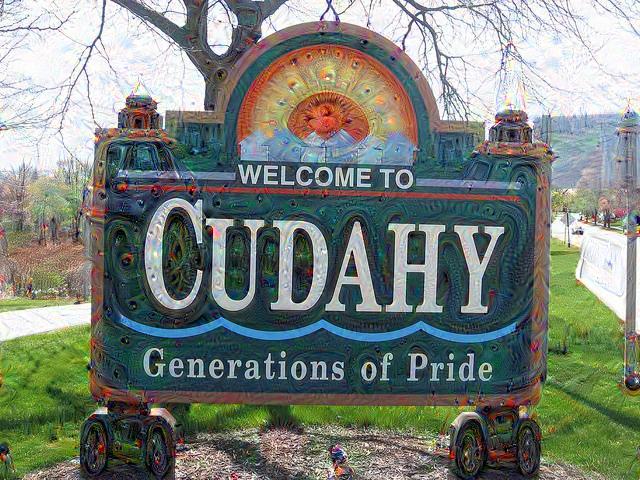
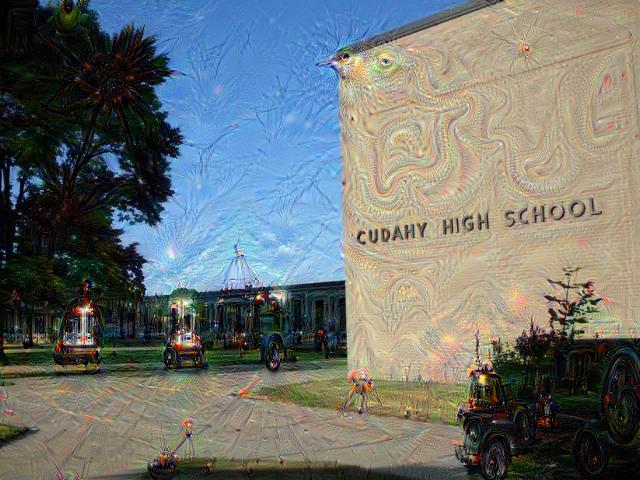
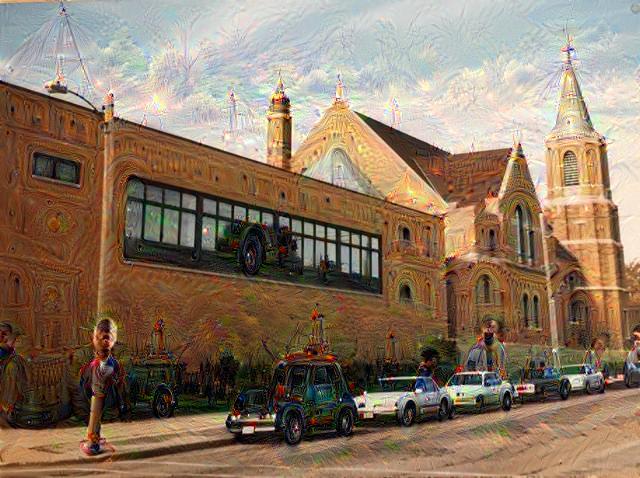
Crisp leaves enshroud Cudahy, never as beautiful in life as they are in death. All rejoice in the tomb of summer, frolicking in the burial ground of a time that is no more. This remorseless decomposition, land of nostalgia and déjà vu, idyllic for football and hunting and lakefront bonfires at night, it calls from a place beyond instinct, one primal or mystical and ineptly mapped by our concepts. If Nature speaks through her patterns, what are we to make of this delirious paean to necrophilia, this hypnotic Ode to Mortality?

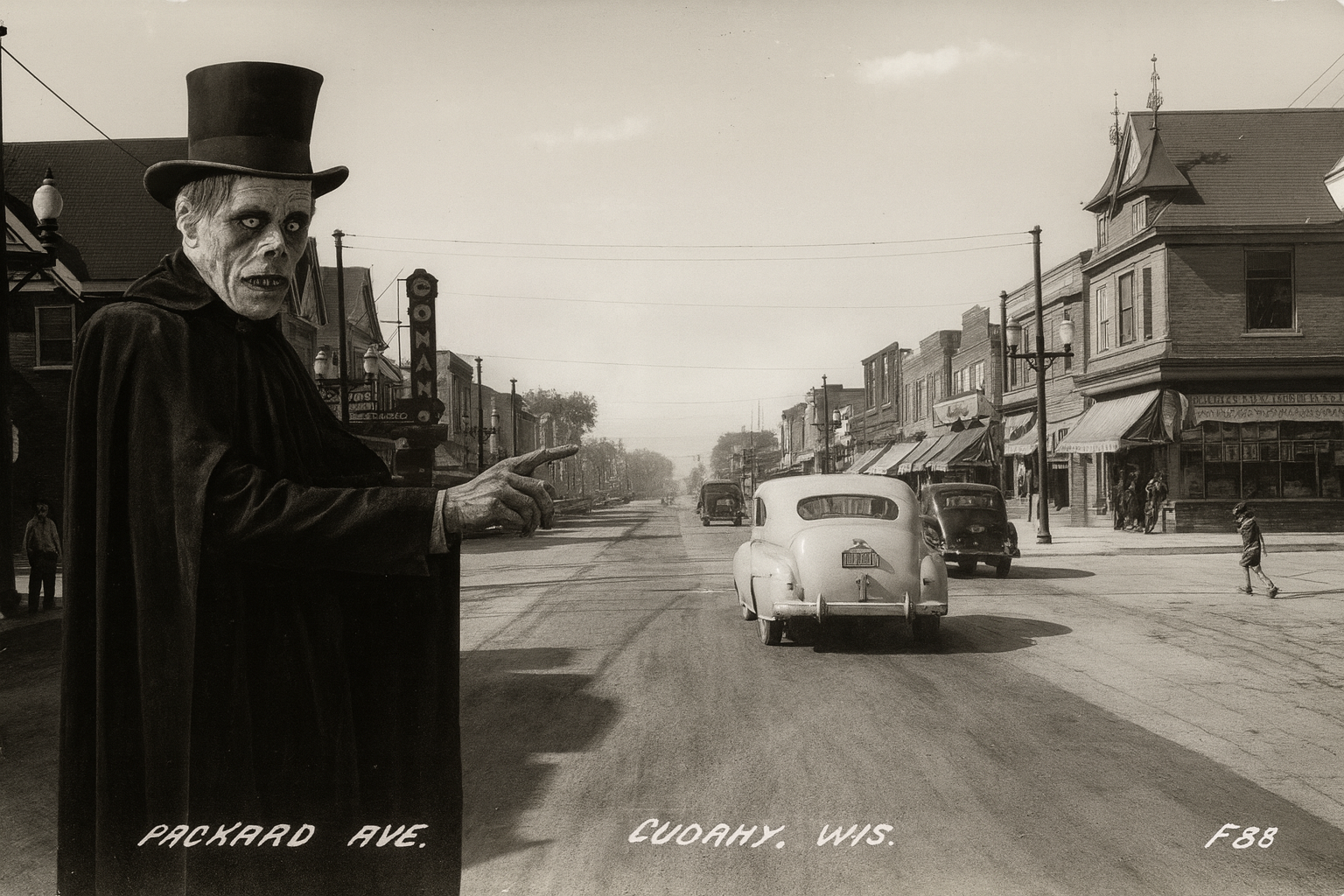
The gloomy, taciturn Dr. Harris, glaring at us through bifocals and removing them to intensify his sulphurous gaze, stroked his unkempt beard and shook his head when we proposed a joint independent study titled, A History of the Cudahy Taverns: Packard Avenue. We returned the following day to plead our case, wielding the deadly argument that his dismissive reference to Cudahy as “some small, blue-collar abutment of Milwaukee” was no less contemptuous than describing the Temiar of Malaysia (his dissertation subject) as a group of uninteresting savages with absurd religious beliefs. A twenty-minute session of furious beard stroking ensued, probably infested by the realization that we had actually perused his dreadful, meandering doorstop.

1299914

“Alright boys,” he whispered. “Three credits. Due at the end of the fall semester. I will not give you an incomplete. I will not extend the due date.” After a brief but intense session of beard stroking, he removed his bifocals and fixed us with his legendary disintegrating stare. “Don’t disappoint me.”

1300111

I emerged from his office like Trajan returning from Dacia, but Buzzcut expressed reservations. Though in possession of an uncharacteristically athletic mind for a member of our generation, a congenital diffidence often restrained him from ambitions of heroic proportions. “Petronius, what if there aren’t any records at city hall or the historical society?”

“Records? We are starting ex nihilo. The historian who relies on books is no more than a glorified plagiarist. We are poised to become the primary source to which posterity, in humble gratitude, shall turn. For this we must go to the primordial, oracular sources themselves.”

1299912

The vintage Schlitz globe above the entrance to Otto’s tavern, was it not an atlas of dreams, radiant with the light from a better world? “Bottle of Pabst,” I commanded, my voice a crash of thunder. Though billions of nights had preceded this one, and billions would follow, I detected a singularity, a hand-woven weave in the strands of Fate. I beheld the label on my bottle as Edmund Hilary must have looked upon the flag he planted atop Everest.

“I think we’ll need to present this thing as a horizontal tree, the trunk being the first tavern established,” said Buzzcut. “Branches multiply over the course of the century.”

“Will we wear cute matching dresses when we present our little chart? Will we invite our mommies? Will we serve cookies?”

“We have too much data to put in a simple paper,” he said, squeezing a slice of lemon over a gin and tonic.

1299716

“No doubt Boswell warned Johnson not to put too many words in his dictionary.”

“Different old-timers are giving us different names and dates. We at least need a thesis.”

“Please remind me, what was Suetonius’ thesis? Did he use a mulberry or chestnut tree to coalesce the staggering volume of data he worked with? A great historian does not theorize; he installs a window where none existed, he provides a clear view of what has been obscured.”

“Gibbon theorized.”

“I am aware of that great man’s shortcomings,” I snapped, “all of which are more than redeemed by his pinnacling prose. Now, while we gather data unrelentingly, tonight we must address the question of whether to begin with a prologue, a prolegomenon, or a preamble. I contend that a prolegomenon is the proper choice, prologues being the filthy denizens of science fiction and fantasy novels. And given Harris’ modest scholarship we can safely assume he has never before encountered a prolegomenon. The very word will strike terror into his black heart, an overture of the awe that will send him to his knees long before our addendum to our prolegomenon.”

wisconsin-milwaukee-petronius-jablonski-https-trypophobiac-com-2018-07-18-eyes-lotus-pod-Portraits-of-Cudahy-by-Louis-Wain

“We need to visit different bars. This well is dry. We’ve interviewed all the regulars.”

I bristled at the gruesome inevitability. It was neither the patrons nor the ambience of the other taverns that offended me, but their infernal, nerve-frazzling, soul-raping, caterwauling jukeboxes. Otto’s boasted CDs by Sinatra, Dean Martin, and Perry Como.

“We’ll stick with the oldest buildings,” Buzzcut announced, usurping my role as the commander of our voyage. “I checked with city hall. Out of the eighty-two taverns on the mile-long strip we’re concerned with, only a handful were built before the First World War.”

1300108

I sought Quietude with the reflection that our sudden change of method might facilitate the extraordinary evening prophesized to me. We finished our drinks and plunged into the abyss, exchanging the air-conditioned, submarine-like enclosure of Otto’s for the rainforest outside. Ten feet as the crow flies, The Stone Age beckoned.

“The name and the sixties theme is brand new,” Buzzcut said, mounting a stool while I admired a laminated poster of brontosaurs sipping from a stream of beer flowing out of a giant can. Beside them, a tyrannosaurus in a tie-dyed shirt clutched a bottle in one of its scrawny forelimbs. Artificial ferns and plastic boulders segmented a hall, beyond a rectangular bar, within which a cherubic girl in a cave-girl outfit serviced customers on all sides.

wisconsin-milwaukee-petronius-jablonski-https-trypophobiac-com-mount-silenus-Portraits-of-Cudahy-by-Louis-Wain

In the men’s room I discovered a gem so precious I urinated on my shoes and a generous portion of the wall and floor before composing myself. Above the urinal, upon an ancient and inactive prophylactic dispenser, on a faded image of a buxom bikini-clad girl who “will love you for using ultra-ribbed,” some great man had inscribed something that tells us more about ourselves than the paintings in the Lascaux Caves.

I put my head on the bar and laughed until I wept. Unable to transmit the revelation to Buzzcut, I pointed.

“It’s nothing, ma’am,” he told the bartender after an unbelievably brief inspection. “Someone wrote something on the condom machine, that’s all.”

“This is not only dissertation-worthy, it could earn me an entire chapter in the Encyclopedia of Philosophy. Transcribe it literatim.” Waving away his protests, I paced behind his stool with deliberate steps, avoiding the lines between the tiles. “On the essence of humor,” I said, pleased with the bold title. “To philosophers influenced by Wittgenstein, the quest for a common feature shared by all humorous things must seem a fool’s errand. Is it not amazing how one cryptic blatherskite can derail an entire tradition? I maintain that laughter is nothing more than an instinctive reaction to the misfortune of others. Misfortune is to laughter what dust is to a sneeze.”

wisconsin-milwaukee-petronius-jablonski-https-trypophobiac-files-wordpress-com-2016-02-71fv6wj6vel-jpg-Portraits-of-Cudahy-by

“That’s called sadism,” Buzzcut interjected in an acerbic tone. “Lots of funny things don’t involve misfortune.”

“Consider my paradigm. Ponder the grim plight of the man who scratched ‘this gum tastes bad’ on a prophylactic dispenser. Wherefore the humor? What Aeschylus, what Sophocles could describe the torments life will divulge to him at every turn? And yet the mere thought of this poor creature chewing on a condom — perhaps, we can dream, trying to blow a bubble — induces laughter the way a tap on the knee provokes a kick. This is utterly inexplicable unless we grant that humor is an instinctive response. Compare this to the joy derived from Don Quixote, the beatings of Curly and Larry, the lamentations of Laurel and Hardy …”    

Also set in Cudahy:

1300952

Woolgathering & Pining for Cudahy in the 1980s

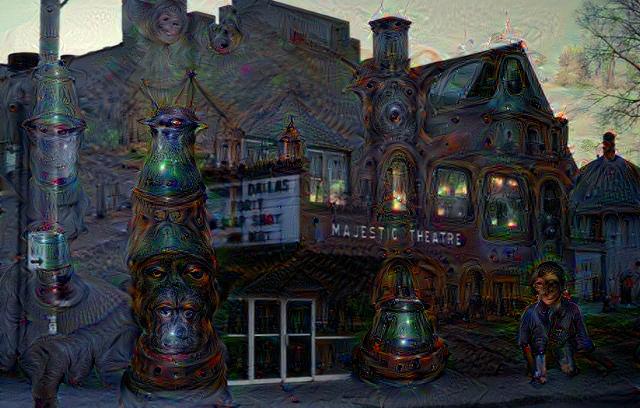
Dick and Debbie’s Goldmine. The Courthouse. The Pumpkin Tree. The Hippodrome. The Bear’s Lair. Chuck and Dolly’s. Club Baghdad. Pat Henry’s after working third shift. Getting served for the first time at Rod’s Liquor Store with 70-cent quarts of Rhinelander. Beachers at the Pumphouse and Smoky’s. Grateful Dead concerts at Alpine. And Springsteen. Picking up girls at Hot Shots and taking them to Pulaski Park. Gold’s Gym. The Hobby Shop. Scott’s Rose Gardens. Discovering the Alabama Slammer. Rediscovering the Alabama Slammer because you can’t remember the maiden encounter. Quarter-barrels of Hamms for $10 (sans deposit) and 60 Beachers in a row! (One had seven brave diehards in the rain; one had 150+.) The original library across from the post office. Seeing Caddyshack at the Majestic Theater (and Halloween, and Phantom of the Paradise). Taking the bus to Southridge to buy Kodiak at Tobacco Town. (They also had a theater & pet store.) The pool hall on Packard & Ramsey(?) had Iron Man on the jute box and wearing an army jacket was mandatory. The carnival that came to Packard Plaza each spring. Fish fries. Sneaking into Sheridan pool after Beachers (and the golf course pond). New Year’s Eve attempts to have one drink in each bar on Packard, Odyssey-like and ultimately tragic. Waiting on the steps of Adamczyk Foods for The Dude who bought us beer at Rod’s Liquor. I’d trade all my tomorrows for a Beacher in 84.

1299918

The only barrier separating Then from Now is a distance finite and definite, measurable by the hands of a clock, each minute connected to the next like a series of steps leading inexorably between two towns. Yet that time could just as well be Atlantis. And you’re visiting. Everyone was living their lives like you are now, that time just as real to them. What became of it? How can something so vivid and tangible become the dream of a shadow? Maybe this moment will be different. They tell you to seize the day but they never say how. Does Home Depot have special gloves

“The places that we have known belong now only to the little world of space on which we map them for our own convenience. None of them was ever more than a thin slice, held between the contiguous impressions that composed our life at that time; remembrance of a particular form is but regret for a particular moment; and houses, roads, avenues are as fugitive, alas, as the years.” Marcel Proust

Petronius Who?!

On the back: “Cudahy Phantom says turn back now lest the dust and silence take you for their own. Owes me 1/2 stick bttr.” Some sources say he ran for mayor and owned a tavern.

Standard
Climbing, Existentialism, Fatalism

Mount Silenus

A Vertical Odyssey of Extraordinary Peril

MT BIG

Jablonski’s writing “employs secrets and intrigue as a driving, page-turning force. … [He] is able to inject a sense of immediacy and intensity in the story by using sparse description that suggests more than it tells.” Publishers Weekly

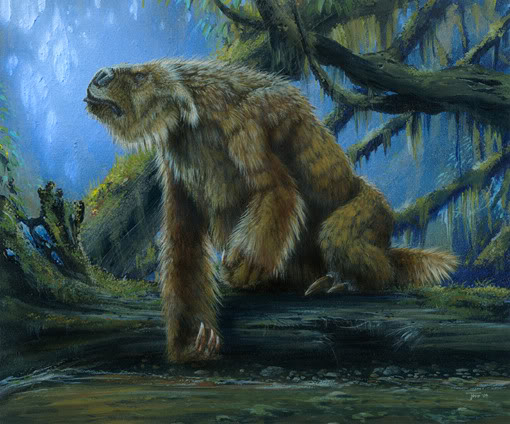
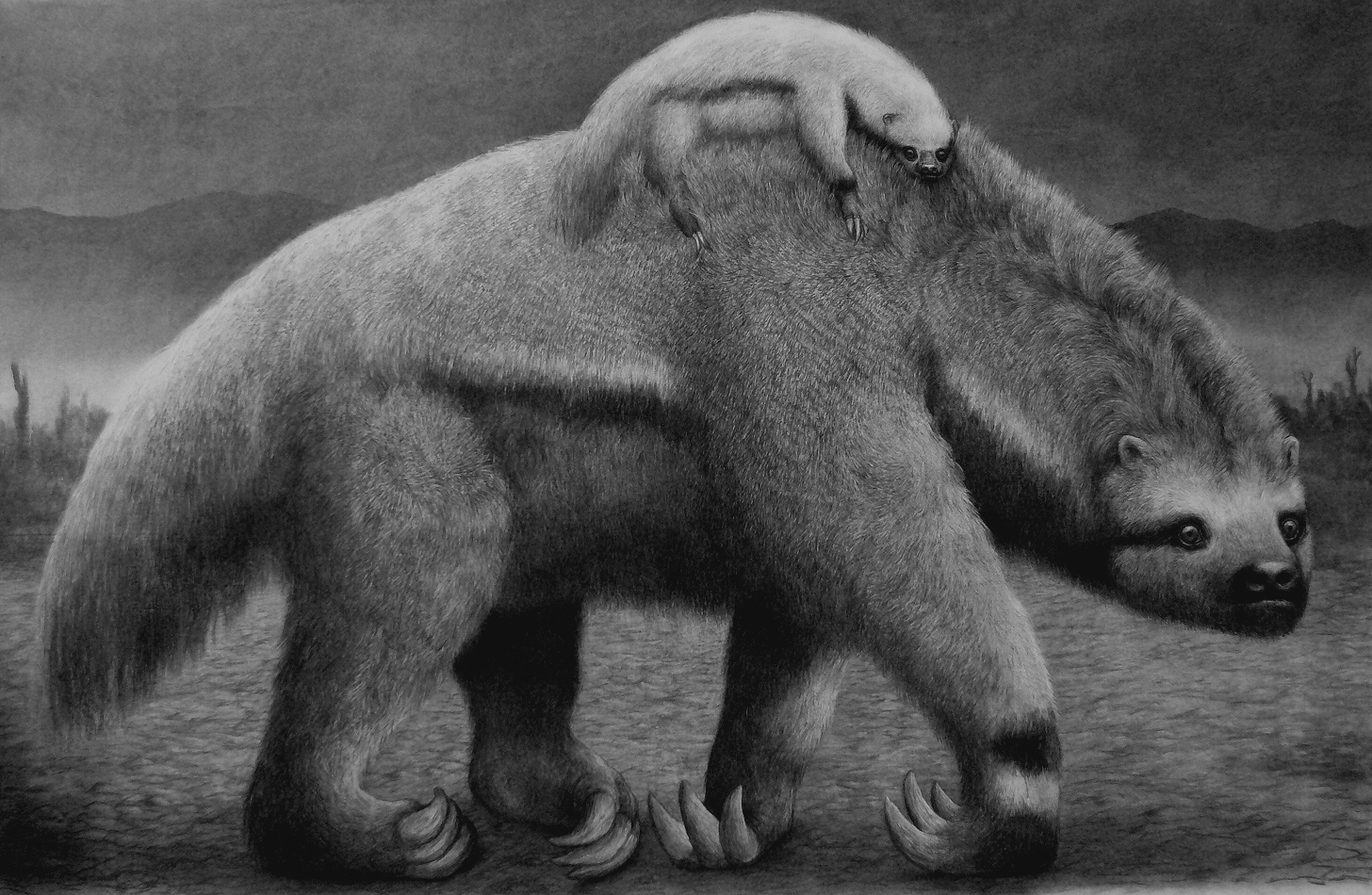
When novice climbers Trevor and Gaspar attempt Mount Silenus they discover that inspiration from a famous book makes a poor substitute for experience. Accuracy is important on mountains, especially one darkened by legends of a prehistoric sloth — the Abominable Unau — and the indigenous people who make sacrifices to it. As the text bears less and less resemblance to the terrain, squabbles over its interpretation become a battle of faith vs. reason. Those are best fought on flat surfaces.

Why does a man climb a mountain? To taste the distilled essence of life, to glimpse the clandestine maneuvers of his soul, and because he believes everything he reads. For two high school teachers who skipped their climbing classes, a masterpiece advocating spontaneity over skill proves irresistible. Unknown to them, the reclusive author honed his technique scaling barstools and brooding over the unjust fame of Nietzsche. He ignored eyewitness accounts of the Abominable Unau for stylistic reasons. Stories about wrathful apparitions infesting a labyrinth of caves didn’t make the cut either.

During a quixotic journey in the general direction of the summit,  Trevor and Gaspar join a scientist investigating paranormal activity on one of the plateaus. The book fails to warn about traps set by the mountain people to protect the sacred site from desecration. When they fall into icy catacombs they must confront the source of the legends to survive.

“Like a surreal existentialist crisis” PW

Giant_Ground_Sloth

Chapter One

They squeeze between amber stalagmites and squat beside a man whose patience abandoned him before his spirit. An ice axe remains frozen in his hands, its tip slathered with the red lacquer coating his face. The holes in his forehead could be mistaken for spider eyes.

“What was the hurry?” says Trevor. “I heard death by hypothermia is painless.”

“How does anyone know that?” says Gaspar. “Were volunteers assigned different ways to die and asked to rate them?”

Their breath expands and dissipates in the cave, joining frenzied thoughts long ago freed from the ice man’s skull. The flashlight summons forms from the void like a wand brandished by sorcerers. A mushroom of ice towers over them, its oak-thick stem withering below a luminescent rotunda. The shapes on the ground are not rock formations. Not yet.

“Look what some of them are wearing,” says Trevor. “I’ve only seen gear like this in old pictures.”

“They didn’t fall in at the same time. Look what else they have. Does that book look familiar?”

“What an interesting coincidence.”

“I see the beginning of a pattern,” says Gaspar. “I’d say this warrants skepticism of the remaining chapters.”

“What else would they have been reading, a book on beekeeping?”

“They should have. It’s an interesting hobby with few casualties.”

“How could waiting to die be the lesser evil?”

“No accounting for taste. Maybe they came back after going down there.”

The passage descends toward a purple light surging beneath chandeliers of fused crystals and aborted supernovas. Calcite nubs protrude from the path like hands reaching for their ankles.

“Let’s wait for help,” says Trevor.

“My survival instinct says we should be a bit more proactive. Patience hasn’t been an effective strategy here. I’ve heard of waiting rooms but this is ridiculous.”

“Dr. Zardeen was next to us when the crevasse opened. There’s no sign of him.”

“What’s the bad news?” says Gaspar.

“Gentlemen,” calls a distant voice.

“Doctor, did you notice a group of climbers in the passage back here?” shouts Trevor.

“They might need first aid,” says Gaspar, “but take your time.”

“They are quite dead. They were probably too frightened by what’s over here. Hurry, gentlemen. This is what I have been looking for.”

Strange light caricatures Gaspar’s and Trevor’s silhouettes as they approach, as if in mockery, making them appear no less fantastic and alien as the indigenous formations. In darkness the ice men continue their vigil, rebels holed up against the army of time, saved by an intercessor no less ruthless.

“An engaging narrative” PW

Megatherium

Petronius Who?

Standard
Canes pugnaces, Existentialism

In Search of Proust’s Basset Hound in the Library of Babel

d7eab8aa95e6f2656d3e240b89f17b76--dali-paintings-bassett-hound

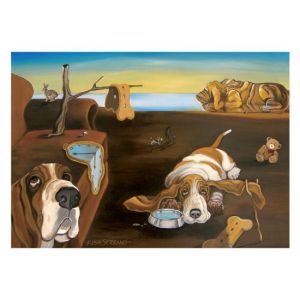
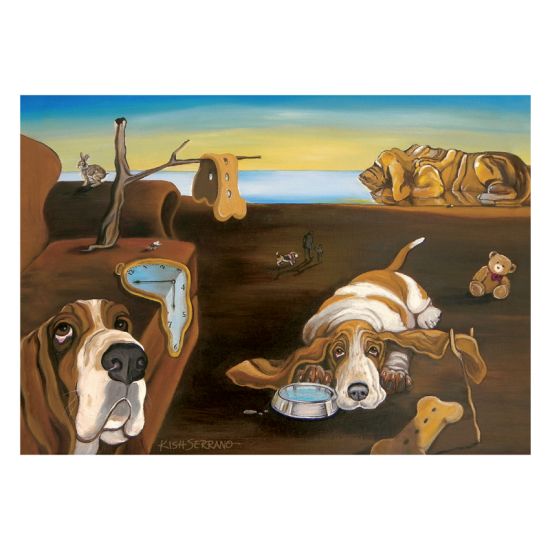
The Library of Babel contains all possible books — every combination of letters and punctuation marks. You can check out only one. The choice is obvious. Hurry. It’s a big place and there’s no catalog. The chances of finding it are astronomical. Most books contain nothing but gibberish; trillions more involve vampires. But you’re feeling lucky.

“The unicorn impaled the elf on its horn, thereby expunging him from the memory of elves.”

It’s a children’s book by Cormac McCarthy. Your niece would love this, and it would prepare her for life better than most of its condescending ilk. Keep looking. Fear and Loathing in Los Vegas as written by Dostoyevsky? Meh. You want something sublime, the greatest story never told. Put The Decline and Fall of the American Empire by Gibbon back. Slow down at a car wreck instead.

There will be many alternate versions of In Search of Lost Time, some the same as the familiar one except for a single punctuation difference, others with unusual variations where Marcel doesn’t go to bed early. (No, you’re not looking for the one where he falls in love with cannabis instead of hawthorns. Think big.)

Why Proust? It’s the sorcerous powers of description. You don’t need to keep a flow chart of the characters or study the Dreyfus affair. You want to read how the moon in the afternoon sky is like a beautiful actress who sneaks into the audience to watch a portion in which she does not have to appear. Virginia Wolfe said the best thing about life is reading Proust. That ignores some conspicuous contenders, but he’s the only writer who cracks the top five. There’s only one way it could be improved and you don’t have to feel like a Philistine for saying this.

6536145-proust-ce-reactionnaire-qui-n-est-pas-notre-genre

Other patrons rush past you, some deranged. They’re not homeless; they live here. Most have never seen a book containing a coherent word and you’re holding The Bridges of Madison County as written by Faulkner. Who knew Robert and Francesca had such rich inner lives? Don’t wave it around. Some of the residents believe there’s a Man of the Book who knows where everything is. Being mistaken for him will only slow you down.

One patron stops and tells you he’s read the completed versions of Dead Souls and The Castle and a readable one of Atlas Shrugged and Animal Farm by Peter Singer. He obviously hasn’t spoken to anyone in ages. Is anything worse than listening to someone blather about his favorite fiction? He says Douglas Adams’ version of “The Library of Babel” is an improvement, but The Hitchhikers Guide as written by Borges is too short, little more than an outline. He starts to summarize the true account of what caused the Big Bang but his phone chimes and he has to take it.

It’s been a long day. You heft a few safeties in case you can’t find The One: your biography as written by Plutarch, Alice’s Adventures in Wonderland by Henry James, Newton’s response to Einstein, War and Peace by Laurence Sterne.

Stop. Back up. On the top shelf of the previous hexagon. Open the book. Marcel’s potty training a puppy with copies of Le Figaro all over the floor. Read how it galumphs through Combray and Balbec, growing into its tree stump feet, not quite keeping up with the growth of its ears:

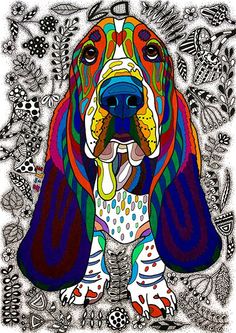
“Basset Hounds, followers of the scent from a golden age, keepers of the promise that reality is not what we can see, companions to our children, guardians of our homes, prodigal sons of Saint Hubert, beloved ones of Napoleon III, their consummate loyalty and stoic tolerance a beacon, do they not speak with the voice heard by Augustine: ‘We are not God, but He made us’?”

8-basset-hound-dean-russo

If that sentence has a verb it’s wearing camouflage. Score! You found the alternate version where Proust dumps Albertine and adopts a dog. Credit where it’s due: the original is beyond praise until The Captive and The Fugitive, when empathy fatigue sets in. Obsessive jealousy over your girlfriend’s girlfriends? Death, where is thy sting?

Skip ahead a few pages. Make sure this isn’t a version that turns to gibberish. “Children of wolves, abandoning their family to join the children of apes, shifting their shape to guide and protect them, enabling the transcendence of the apes, as though both blueprints were left out in a storm, smearing the designs as if some careless chronicler neglected to fix the boundaries, the ink of which was not indelible and remains wet, our relationship becoming one of mutual dependence, yin and yang, synergistic, not that of gods and pliant subjects, our paths crossing then merging in the manner of two themes converging in a symphony.”

No writer had more aptitude for canine phenomenology, a talent never realized in the original, two volumes of which were devoted to cursing the daughters of Gomorrah and fearing the conspiracies of their evil coven. It’s more than a stretch for anyone who grew up reading Penthouse. In the Babel version he turns his attention to seeing the world through his dog’s nose. Watching the dog nap, he wonders if its dreams are governed by scents the way its waking life is. There is an entire universe humans cannot access. We are illiterates surrounded by the classics. Delusions of our central importance are no compensation for the inability to smell rain before a storm, to read the history of a trail, to smell the spiced opiate of an excited mate.

Who but Proust can show the elasticity of Time, how it travels faster for dogs. In the span of a decade he changes little but his dog grows old. The difference between our concept of mortality and a dog’s awareness of its increasing feebleness is a difference of degree. They know something’s happening. Death approaches with a drunken swagger. We all hear it.

basset-hound-pop-art-pink-sharon-cummings

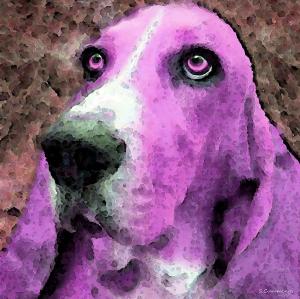
Basset Hound Copyright Sharon Cummings

Remember the part in the original when you had to put the book down? After his grandmother dies he returns to the seaside resort they visited and the immensity of the loss hits him like some agoraphobic horror of empty space and all the grief you ever felt in your entire life returned. In the same way, only Proust could do justice to the heart-gouging agony of losing a dog, how it hurts worse than losing a person. (Shhhhh. You’re not supposed to say that.) Maybe he could tell us why. Hopefully your answer is wrong, that the worst dog is better than all but a few humans. Don’t bet that he disagrees.

Perhaps their time together gave him vicarious access to a world of joy unmitigated by anxiety, a paradise free from regrets of the past and fear of the future, a place outside Time. The madcap ecstasy a dog feels upon greeting its master, which human joy approaches it? The pleasures of the mind that allegedly make us superior are the ones that spoil the intensity and appreciation of bliss. How many systems of meditation are concerned with focusing on the all-encompassing nature of Now, the default state of mind for dogs, the one humans are programmed to avoid? Good luck attaining it by non-vicarious means.

Proust eventually came to a dim view of friendship, wondering how a man of Nietzsche’s intellect could have held it in high regard. This was only because he didn’t have the ideal friend. In the version you’re carrying, he does. Instead of slouching through a lull, this draft hits its stride, galumphing like a Basset Hound.

e1d226cc6e449adfc98c0c22fdc072ed

The first volume just turned one-hundred. Read all of them, even though he’s not accompanied by a faithful pooch. Some people have shattering religious experiences from Proust. Join them. This six pack version remains the gold standard, though the new Penguin one is not bad. This online version is great for work (if not the best thing about work).

Read Hitchens’ article: “We know from Proust’s haggard original editors, as we do from the memoirs of his naive and devoted housekeeper, that the first manuscript might have come from someone more than half insane, including as it did interpolations, marginal additions, excisions, scrawls, and—the worst sign of all—strips of fresh paper stuck at odd angles onto exhausted pages.”

The average page contains sentences like these:

And just as the Japanese amuse themselves by filling a porcelain bowl with water and steeping in it little crumbs of paper which until then are without character or form, but, the moment they become wet, stretch themselves and bend, take on colour and distinctive shape, become flowers or houses or people, permanent and recognizable, so in that moment all the flowers in our garden and in M. Swann’s park, and the water-lilies on the Vivonne and the good folk of the village and their little dwellings and the parish church and the whole of Combray and of its surroundings, taking their proper shapes and growing solid, sprang into being, town and gardens alike, from my cup of tea.

Sweet Sunday afternoons beneath the chestnut-tree in our Combray garden, from which I was careful to eliminate every commonplace incident of my actual life, replacing them by a career of strange adventures and ambitions in a land watered by living streams, you still recall those adventures and ambitions to my mind when I think of you, and you embody and preserve them by virtue of having little by little drawn round and enclosed them (while I went on with my book and the heat of the day declined) in the gradual crystallization, slowly altering in form and dappled with a pattern of chestnut-leaves, of your silent, sonorous, fragrant, limpid hours.

The places that we have known belong now only to the little world of space on which we map them for our own convenience. None of them was ever more than a thin slice, held between the contiguous impressions that composed our life at that time; remembrance of a particular form is but regret for a particular moment; and houses, roads, avenues are as fugitive, alas, as the years.

Perhaps it is not-being that is the true state, and all our dream of life is inexistent; but, if so, we feel that these phrases of music, these conceptions which exist in relation to our dream, must be nothing either. We shall perish, but we have as hostages these divine captives who will follow and share our fate. And death in their company is somehow less bitter, less inglorious, perhaps even less probable.

As though the musicians were not nearly so much playing the little phrase as performing the rites on which it insisted before it would consent to appear, and proceeding to utter the incantations necessary to procure, and to prolong for a few moments, the miracle of its apparition, Swann, who was no more able to see it than if it had belonged to a world of ultra-violet light, and who experienced something like the refreshing sense of a metamorphosis in the momentary blindness with which he was struck as he approached it, Swann felt its presence like that of a protective goddess, a confidante of his love, who, in order to be able to come to him through the crowd and to draw him aside to speak to him, had disguised herself in this sweeping cloak of sound. And as she passed, light, soothing, murmurous as the perfume of a flower, telling him what she had to say, every word of which he closely scanned, regretful to see them fly away so fast, he made involuntarily with his lips the motion of kissing, as it went by him, the harmonious, fleeting form.

the-annals-high-resolution

Delirious Raving from Publishers Weekly

Face-Melting Excerpt

Creatio ex Dachshund

Shi Tzu, Cosmic Yak Dog

Standard